
| Quick Answer
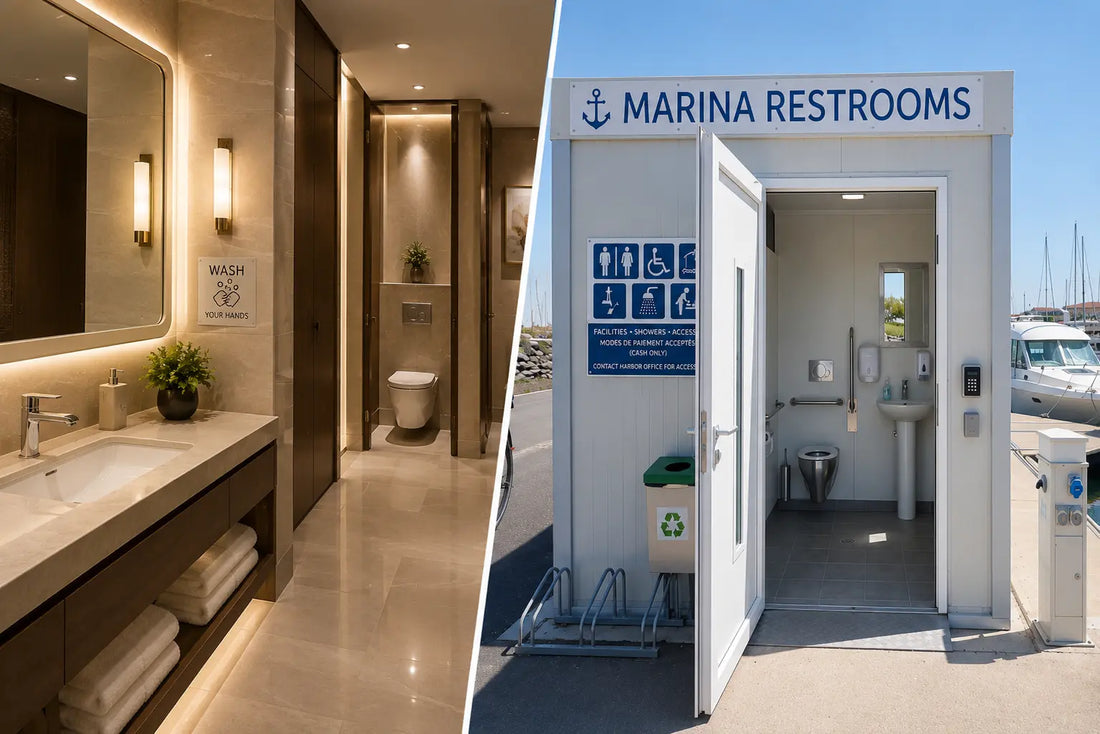
Although marinas and hotels both serve guests, their restroom hygiene requirements are very different. Marina bathrooms face constant moisture, sand, salt, seasonal crowds, and public access, while hotel bathrooms typically operate in cleaner, climate-controlled environments with more predictable traffic. To maintain a cleaner and more hygienic experience, many marina operators rely on flushable toilet seat covers, durable commercial washroom hygiene products, and more frequent cleaning schedules that address the unique demands of waterfront facilities. |
This guide explains the operational differences between marina and hotel restrooms, along with practical hygiene strategies that help improve visitor satisfaction and simplify facility maintenance.
Table of Contents
- Key Takeaways
- Marina and Hotel Bathrooms Are Not the Same
- Marina vs Hotel Bathrooms: A Quick Comparison
- Beyond Traffic: Environmental Factors That Affect Restroom Hygiene
- 4 Reasons Marina Restrooms Need a Different Hygiene Strategy
- Why Flushable Toilet Seat Covers Matter in Marina Restrooms?
- Choosing the Right Commercial Washroom Hygiene Products
- Best Practices for Marina Restroom Hygiene
- Common Mistakes Marina Operators Should Avoid
- Choosing Hygiene Products That Last in Marina Environments
- Final Thoughts
Key Takeaways
- Marina restrooms experience higher moisture, sand, and outdoor contaminants than hotel bathrooms.
- Seasonal visitor surges make inventory management more challenging at marinas.
- Flushable toilet seat covers improve user confidence while supporting cleaner restroom experiences.
- The right commercial washroom hygiene products reduce maintenance issues and improve operational efficiency.
- A restroom strategy designed for hotels may not perform well in a marina environment.
Marina and Hotel Bathrooms Are Not the Same

At first glance, marina restrooms and hotel bathrooms appear to serve the same purpose. Both require high cleanliness standards and play an important role in the overall visitor experience.
However, their operating environments are completely different.
Hotel bathrooms typically serve overnight guests who access climate-controlled indoor facilities. Traffic patterns are relatively predictable. Maintenance teams often work on scheduled housekeeping rounds.
Marina restrooms operate in a far more demanding environment than hotel bathrooms.
Visitors often arrive directly from boats, docks, beaches, and other waterfront recreation areas. Wet clothing, muddy shoes, sand, and saltwater enter the restroom throughout the day. Many facilities also remain open to the public, creating inconsistent usage patterns.
As a result, visitors often expect marina restrooms to be more challenging to maintain, making visible cleanliness even more important for building confidence.
Because of these differences, marina operators need a hygiene strategy built specifically for their environment instead of copying hotel maintenance practices.
Marina vs Hotel Bathrooms: A Quick Comparison
| Factor | Marina Bathrooms | Hotel Bathrooms |
|---|---|---|
| Visitor Type | Boaters, travelers, public visitors | Registered hotel guests |
| Traffic Pattern | Seasonal and unpredictable | More consistent |
| Moisture Levels | High | Low |
| Sand and Dirt | Common | Minimal |
| Salt Exposure | Frequent | Rare |
| Public Access | Often unrestricted | Usually controlled |
| Cleaning Frequency | Multiple times daily during peak season | Scheduled housekeeping |
| Hygiene Supplies | High consumption | Moderate consumption |
This comparison highlights why restroom planning should match the facility rather than follow a universal approach.
While hotels prioritize guest comfort and consistency, marinas must balance cleanliness with changing environmental conditions and unpredictable visitor volumes.
Beyond Traffic: Environmental Factors That Affect Restroom Hygiene
While visitor traffic affects restroom cleanliness, the surrounding environment also plays a major role. Marina restrooms face conditions that hotels rarely encounter.
| Environmental Factor | Marina Bathrooms | Hotel Bathrooms |
|---|---|---|
| Salt air exposure | Can accelerate corrosion of metal fixtures and dispensers | Minimal |
| Humidity | Frequently high, especially near the waterfront | Controlled through HVAC systems |
| Outdoor debris | Sand, dirt, leaves, and dock residue enter regularly | Limited |
| Wet footwear | Common throughout the day | Less frequent |
| Seasonal weather | Rain, wind, and boating conditions affect restroom cleanliness | Limited impact indoors |
These environmental differences mean marina operators often need more durable restroom fixtures, more frequent inspections, and hygiene products designed for heavy commercial use.
| Expert Insight
Marina operators often invest heavily in docks, boat storage, customer amenities, and waterfront infrastructure. However, restroom cleanliness is one of the few experiences every visitor shares. Even well-maintained marina facilities can leave a poor impression if restroom hygiene falls below guest expectations. |
4 Reasons Marina Restrooms Need a Different Hygiene Strategy

1. Moisture Creates Constant Cleaning Challenges
Water is part of everyday marina operations.
Guests frequently enter with wet shoes, swimsuits, towels, or boating equipment. Floors remain damp longer, increasing the chance of slips, odors, and bacterial growth.
Maintenance teams should inspect restrooms more frequently during busy hours instead of relying solely on fixed cleaning schedules.
2. Sand, Dirt, and Debris Accumulate Faster
Unlike hotels, marina visitors bring outdoor debris inside.
Common contaminants include:
- Sand
- Mud
- Leaves
- Fishing residue
- Dock dust
- Gravel
These materials spread quickly across restroom floors and fixtures.
Without frequent cleaning, the restroom begins to appear dirty even when surfaces have been disinfected.
3. Seasonal Peaks Increase Supply Consumption
Many marinas experience dramatic traffic increases during warmer months.
Visitor numbers can multiply over weekends and holidays.
This creates challenges such as:
- Empty dispensers
- Increased paper waste
- More frequent trash removal
- Higher cleaning workloads
Planning inventory around average traffic often results in supply shortages during peak periods.
4. Public Access Changes User Behavior
Unlike hotel guests, marina restroom users may include:
- Boat owners
- Day visitors
- Tourists
- Event attendees
- Contractors
- Delivery personnel
Because many users have no ongoing relationship with the facility, restroom misuse can be higher.
Facilities need durable dispensers and hygiene products designed for heavy public use.
Maintenance Planning Matters More at Marinas
Unlike hotels, marina visitor numbers can change dramatically depending on the season, weather, weekends, and local events.
For example, a quiet weekday may require only routine maintenance, while holiday weekends can quickly increase restroom usage.
Instead of relying on fixed cleaning schedules, marina operators should adjust inspections based on visitor activity and supply consumption. This proactive approach helps prevent empty dispensers, supply shortages, overflowing waste bins, and avoidable guest complaints.
For additional cost-saving strategies, explore our guide on improving marina restroom cleanliness without increasing supply costs.
Why Flushable Toilet Seat Covers Matter in Marina Restrooms?

Visitors often form an impression of restroom cleanliness before they even use the facilities. Visitors also have growing concerns about germs commonly found in public restrooms.
Even when toilets are properly cleaned, users may hesitate if they are unsure about surface hygiene.
Providing flushable toilet seat covers helps address this concern.
Unlike hotels, marina restrooms often serve guests who arrive directly from boats, docks, or beaches. Offering a visible hygiene solution gives visitors additional confidence in shared restroom facilities, especially during busy boating seasons.
Benefits include:
- Creates an added hygiene barrier
- Improves visitor confidence
- Encourages proper restroom use
- Supports a cleaner user experience
- Flushes easily when designed for commercial plumbing systems
For marina operators, this small addition can significantly improve guest perception without increasing cleaning complexity.
Unlike makeshift alternatives, purpose-designed public toilet seat covers provide a consistent solution that visitors immediately recognize.
| Expert Insight
Guests often decide whether a restroom feels clean within seconds of entering. Well-stocked dispensers, dry floors, and visible hygiene products such as public toilet seat covers immediately reinforce confidence before visitors use the facilities. |
Choosing the Right Commercial Washroom Hygiene Products
A marina restroom requires products that perform well under demanding conditions.
The focus should be durability, easy maintenance, and reliable availability.
| Commercial Hygiene Product | Why It Matters |
|---|---|
| Flushable toilet seat covers | Improve hygiene confidence while reducing contact concerns |
| Soap dispensers | Support regular handwashing |
| Touch-free dispensers | Reduce shared touchpoints |
| High-capacity paper dispensers | Reduce refill frequency |
| Waste receptacles | Handle increased seasonal waste |
| Surface disinfectants | Support routine cleaning |
Selecting dependable commercial washroom hygiene products helps reduce maintenance interruptions while improving visitor satisfaction.
Best Practices for Marina Restroom Hygiene
Increase Cleaning During Peak Hours
Cleaning frequency should reflect visitor traffic rather than fixed schedules.
Busy weekends often require multiple inspections each day.
Monitor Supplies Proactively
Running out of restroom supplies creates a poor visitor experience.
Regular inspections help ensure that:
- Soap remains available
- Paper products stay stocked
- Waste bins do not overflow
- Toilet seat cover dispensers remain full
Choose Products Built for Commercial Use
Residential restroom products often fail under heavy public use.
Commercial-grade dispensers reduce maintenance while lasting longer.
Improve Visible Cleanliness
Visitors judge cleanliness within seconds.
Simple improvements include:
- Dry floors
- Clean mirrors
- Full dispensers
- Fresh-smelling restrooms
- Organized counters
These details reinforce confidence before guests use the facilities.
Include Flushable Toilet Seat Covers
Adding flushable toilet seat covers is a practical way to improve restroom hygiene without changing existing cleaning procedures.
They provide visitors with an additional hygiene option while supporting a more positive restroom experience.
Common Mistakes Marina Operators Should Avoid
| Mistake | Better Approach |
|---|---|
| Following hotel cleaning schedules | Adjust cleaning based on marina traffic |
| Underestimating seasonal demand | Increase inventory before peak months |
| Using residential dispensers | Install commercial-grade equipment |
| Waiting for guest complaints | Conduct scheduled inspections |
| Focusing only on cleaning | Improve both cleanliness and visitor confidence |
Choosing Hygiene Products That Last in Marina Environments
When selecting restroom supplies, marina operators should consider more than cost.
Look for products and dispensers designed for commercial environments that can withstand heavy daily use and simplify maintenance. High-capacity dispensers, durable materials, and reliable refill availability help reduce service interruptions during busy periods.
Choosing dependable commercial washroom hygiene products also supports a more consistent guest experience throughout the boating season.
Final Thoughts
Marina bathrooms and hotel bathrooms may appear similar, but they operate under very different conditions. Waterfront environments introduce moisture, sand, salt, and unpredictable visitor traffic that require a dedicated restroom hygiene strategy.
By using durable commercial washroom hygiene products, increasing cleaning frequency during peak periods, and providing flushable toilet seat covers, marina operators can create cleaner, more welcoming facilities that improve guest satisfaction and support their property's reputation.
Investing in the right restroom hygiene practices helps deliver a cleaner visitor experience, reduce maintenance challenges, and protect your facility's reputation throughout every boating season.


