
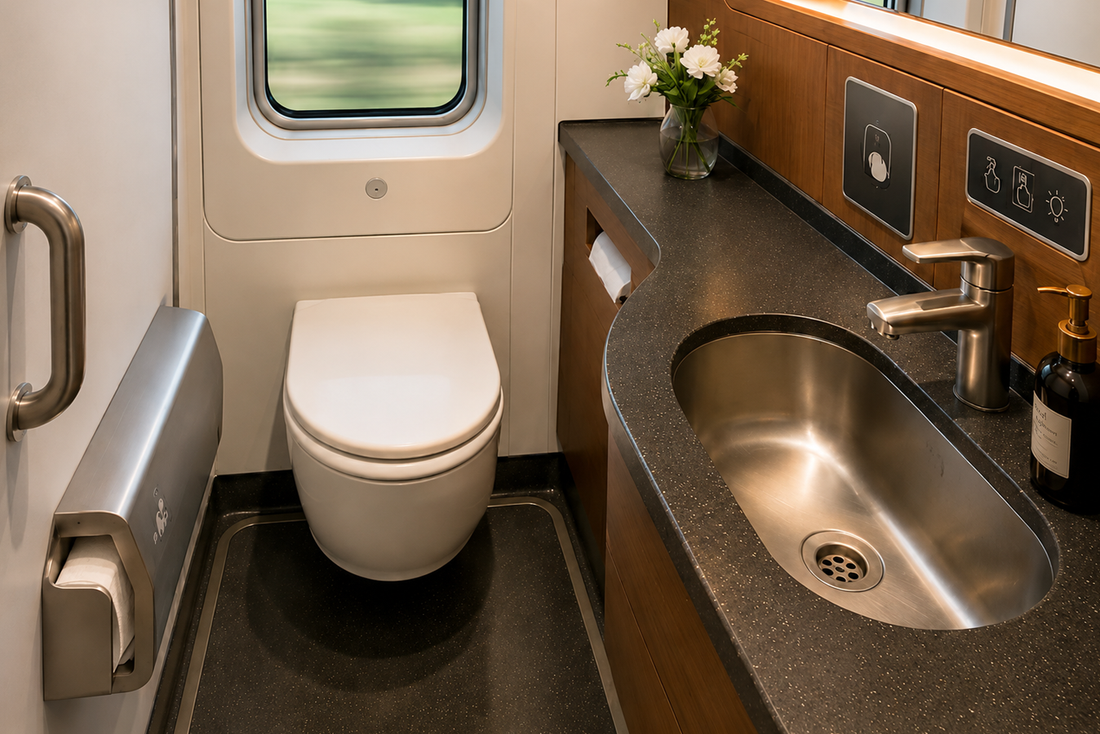
Premium passengers do not need long to judge a rail experience.
In first-class coaches and premium rail travel, passengers often form opinions early in a journey, and onboard restroom hygiene quietly plays a much bigger role than many operators expect.
This is especially true on long-distance and overnight routes, where premium passengers expect consistency throughout the travel experience.
It is rarely discussed directly.
Passengers may not openly complain about hygiene standards, but they remember poor restroom experiences and often associate them with overall service quality.
Table of Contents
- The Reality: Hygiene is Part of the Premium Passenger Experience
- Why Restroom Hygiene Shapes Passenger Perception?
- The 4 High-Traffic Hygiene Zones Premium Rail Operators Need to Manage
- Why Long-Distance Routes Create Bigger Hygiene Challenges?
- What Passengers Actually Notice (And What Matters Most)?
- Why Fixed Cleaning Schedules Are Not Enough in Premium Rail Travel?
- How Premium Hygiene Becomes a Competitive Advantage in Rail Travel?
- Frequently Asked Questions
- Key Takeaways for Premium Rail Operators
- Related Reading
- The Bottom Line
The Reality: Hygiene is Part of the Premium Passenger Experience

Rail operators invest heavily in what passengers immediately see: seating, onboard comfort, premium interiors, food services, and digital convenience.
But onboard restrooms, especially in first-class and premium coaches, are often treated as an operational maintenance task rather than a passenger experience touchpoint.
That creates an experience gap.
Because from a passenger perspective, there is no separation:
Premium seating + poor restroom hygiene = inconsistent experience
Strong onboard service + poor cleanliness = reduced trust
And once that trust drops, it’s hard to recover.
Why Restroom Hygiene Shapes Passenger Perception?

In premium rail travel, restroom cleanliness directly influences how passengers perceive the overall journey.
Even when seating, service, and amenities are strong, poorly maintained, restrooms can affect perceived quality.
Across premium transportation environments, restroom standards increasingly influence passenger satisfaction, perceived service quality, and overall travel confidence.
Common passenger frustrations include:
- Poor cleanliness
- Missing essentials
- Unpleasant odors
- Lack of hygiene options
Hygiene issues are often remembered more strongly than operational successes, particularly during long-distance travel.
And here’s the tricky part: Negative hygiene experiences are shared more often and remembered longer than positive ones.
The 4 High-Traffic Hygiene Zones Premium Rail Operators Need to Manage

Not all restrooms are equal. Each one has its own challenges.
1. First-Class Coach Restrooms
These environments are typically maintained more frequently than standard coaches, but passengers still notice details that shape perceptions of quality.
- Quality of products
- Completeness of setup
- Overall hygiene feel
This is where expectations are high.
2. Lounge & Station Premium Facilities
This is where things get difficult. High traffic. No natural reset point. Continuous use. And yet, this is often the first restroom premium passengers use during their journey. If standards drop here, the overall perception of the travel experience shifts instantly.
3. Dining & Food Service Coaches
Passengers often associate restroom cleanliness with food service quality. Fair or not, if the restroom feels off, it affects how they feel about the kitchen. That’s why even small hygiene issues here have a bigger impact.
4. Overnight & Sleeper Coaches
Overnight sleeper coaches present additional hygiene challenges due to extended usage, moisture, and limited maintenance windows. Passenger expectations also tend to be higher during overnight travel.
Why Long-Distance Routes Create Bigger Hygiene Challenges?
Unlike hotels, premium rail environments operate continuously during active journeys. Long-distance routes, overnight travel, high passenger turnover, and limited maintenance windows can make restroom consistency more difficult to maintain.
Passenger expectations, however, remain high regardless of route duration. A premium passenger boarding for a short journey and one travelling overnight are both likely to judge service quality through visible cleanliness, restroom availability, and hygiene standards.
That is why premium rail hygiene requires more than routine cleaning; it requires consistency throughout the journey.
What Passengers Actually Notice (And What Matters Most)?
Not everything carries the same weight. There’s a clear hierarchy in how passengers judge restroom hygiene:
- Smell – First impression, immediate reaction
- Visible cleanliness – Seat, sink, mirrors
- Availability of essentials – Soap, paper, supplies
- Product quality – What you provide reflects your standards
- Overall condition – Wear, aging, maintenance
You don’t need to fix everything at once. But getting the top three right consistently makes the biggest difference.
The Opportunity Many Rail Operators Overlook: Hygiene Consumables
This is one of the easiest areas to improve - and one of the most visible.
Soap - Low-quality soap signals low attention. Better soap improves both hygiene and perception instantly.
Hand Drying - If it doesn’t work well, people skip it. That breaks the hygiene cycle completely.
Toilet Seat Covers - Still uncommon across many premium rail environments, despite growing passenger expectations.
Some premium rail operators are also exploring flushable toilet seat covers as an additional hygiene option for shared onboard restrooms, particularly in high-traffic environments where hygiene perception matters. Not only is it easier to dispose of, but it also helps to avoid toilet clogs.
Solutions such as LooREADY toilet seat covers can:
- Provide passengers with an added hygiene layer
- Stay in place more reliably than improvised tissue layering
- Flush safely without affecting onboard plumbing systems
- Support a more premium restroom experience

It’s a small detail, but passengers notice it.
Why Fixed Cleaning Schedules Are Not Enough in Premium Rail Travel?
One of the biggest operational challenges for rail operators is that restroom conditions change faster than maintenance schedules.
This is particularly important on long-distance and premium routes, where restroom quality can significantly shape passenger perception.
Peak travel periods, long-distance routes, overnight journeys, and high passenger turnover can degrade conditions quickly.
More effective approaches include:
- Timed restroom checks during long routes
- Restocking based on usage patterns
- Clear ownership during high-traffic periods
- Faster intervention during premium service windows
Consistency matters more than intensity.
How Premium Hygiene Becomes a Competitive Advantage in Rail Travel?
As passenger expectations continue to rise, premium rail operators increasingly compete on experience, not just transportation.
Small operational details, including restroom hygiene, influence how passengers perceive premium value. Operators that prioritize restroom hygiene increasingly treat it as part of the premium passenger experience.
And it shows:
- Higher passenger satisfaction
- Stronger premium perception
- Greater service consistency
- Improved passenger confidence
The investment? Relatively small.
The impact? Much bigger than expected.
Key Takeaways for Premium Rail Operators
- Restroom hygiene directly shapes premium passenger perception.
- Long-distance and overnight routes require more consistent maintenance.
- First-class coach restrooms, lounges, and food-service areas need different hygiene strategies.
- Consumables such as soap, hand drying systems, and toilet seat covers can improve hygiene confidence.
- Consistency matters more than intensive one-time cleaning.
Related Reading
- LooREADY: Redefining Hygiene in High-Traffic Public Toilets
- The NY Times Exposes the Flaws of Paper Toilet Seat Covers – Discover How LooREADY Protects You Better
- What is Ecopolymer Technology?
- Why Flushable Seat Covers Win For You and the Earth?
The Bottom Line
Restroom hygiene isn’t just about cleanliness.
It’s about confidence. It is one of the few places where passengers experience operational standards directly and instantly. And the difference between “good enough” and “thoughtfully done” is what passengers remember.
The good news?
It’s one of the easiest areas to improve, once you start paying attention.


