
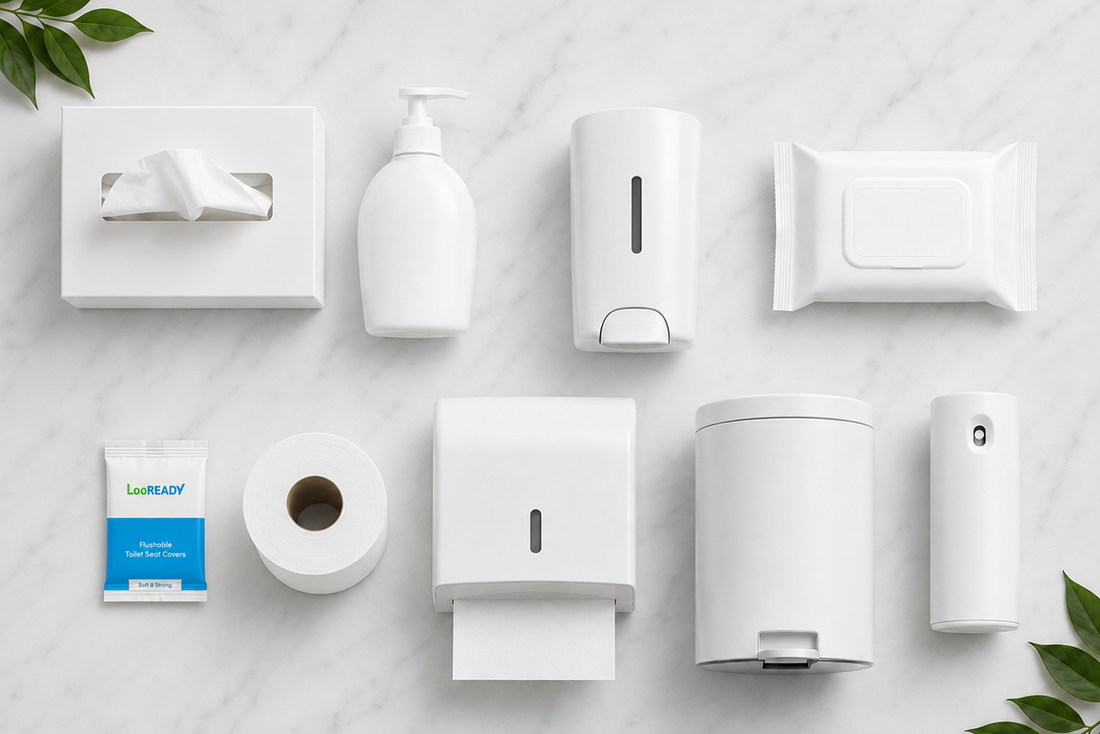
Best Commercial Washroom Hygiene Products for High Traffic Facilities
In high traffic environments, restroom hygiene affects far more than cleanliness. It influences passenger confidence, customer perception, operational efficiency, and maintenance performance across the entire facility.
Whether rail networks, airports, hospitals, hotels, or commercial buildings, shared washrooms are expected to perform reliably under constant daily use. That expectation has pushed operators and facility teams to rethink the role of hygiene systems inside modern public restrooms.
Today, commercial washroom hygiene solutions are expected to support not only user hygiene, but also plumbing compatibility, servicing efficiency, sustainability goals, and long term operational reliability.
Restroom conditions are often one of the most visible indicators of operational standards in transport and hospitality environments.
Increased public awareness around shared space hygiene has also raised expectations for visible and reliable restroom hygiene systems.
|
Quick Answer
Commercial washroom hygiene systems help high traffic facilities maintain cleaner, more reliable restroom environments while reducing servicing pressure and improving user confidence. In transport, hospitality, healthcare, and public infrastructure settings, operationally compatible hygiene products play a critical role in maintaining both cleanliness and system performance. |
Key Takeaways
- High traffic passenger washrooms require hygiene systems designed for continuous use.
- Rail and aviation environments face unique challenges such as limited servicing windows and space constraints.
- Commercial toilet hygiene solutions help improve passenger confidence and operational efficiency.
- Bulk toilet seat covers help ensure supply continuity while reducing procurement complexity.
- Flushable toilet seat covers can improve disposal efficiency and reduce maintenance burden.
- EcoPolymer technology improves durability, flushability, storage efficiency, and sustainability.
Table of Contents
- Why Washroom Hygiene Matters in High Traffic Facilities?
- Commercial Washroom Hygiene in Transport Environments (Rail & Aviation Focus)
- Challenges of Maintaining Hygiene in High Traffic Transport Washrooms
- Essential Onboard Hygiene Products for High Traffic Passenger Facilities
- Common Washroom Challenges vs Recommended Hygiene Solutions
- Why EcoPolymer Technology Matters in High Traffic Facilities?
- How to Choose the Best Commercial Washroom Hygiene Products?
- Why LooREADY Supports High Traffic Washroom Hygiene?
- Procurement Considerations for Transport & Aviation Hygiene Systems
- Frequently Asked Questions
- Final Thoughts
Why Washroom Hygiene Matters in High Traffic Facilities?
In high traffic facilities, restroom hygiene has become part of the overall user experience. Passengers, guests, patients, and visitors increasingly associate restroom conditions with the quality and reliability of the wider environment around them.
Whether passengers are traveling by train, flying long distances, staying in hotels, or visiting healthcare facilities, restroom cleanliness shapes how they perceive service quality. In healthcare settings, maintaining hospital toilet hygiene is especially important to reduce contamination risks in shared washrooms.
For transport operators, facility managers, and procurement teams, maintaining hygienic washrooms at scale presents ongoing challenges.
Passenger washrooms in trains and aircraft often experience:
- Continuous daily usage
- Limited servicing opportunities
- Confined spaces
- High touch surfaces
- Increased passenger expectations
A poorly maintained washroom can quickly lead to:
- Passenger complaints
- Reduced confidence
- Negative service perception
- Increased maintenance burden
For rail and aviation operators, especially onboard washroom hygiene directly affects passenger satisfaction.
Travelers increasingly expect visible hygiene measures and cleaner restroom environments. For travelers using public facilities regularly, understanding how to use public toilets safely while traveling can help reduce hygiene concerns. Visible hygiene measures, including reliable toilet seat protection systems, can significantly improve user confidence in shared restroom environments.
This is driving increased adoption of enterprise grade commercial washroom hygiene systems across transport, hospitality, and healthcare facilities.
Commercial Hygiene Systems for Shared Washroom Environments
Commercial washroom hygiene products are hygiene solutions designed for high traffic restroom environments such as trains, aircraft, hospitals, hotels, and commercial facilities. They include flushable toilet seat covers, flushable hygiene products, touch free dispensers, and sanitization systems designed to improve cleanliness and operational efficiency.
Unlike consumer grade restroom products, commercial hygiene systems must perform consistently under continuous daily usage while remaining easy to service, replenish, and maintain at scale.
- High passenger or visitor volumes
- Faster servicing cycles
- Better hygiene standards
- Reduced maintenance complexity
- Scalable use across multiple facilities
For passenger transport systems, product performance matters.
Washroom products must be:
- Durable
- Easy to replenish
- Space efficient
- User friendly
- Compatible with commercial restroom systems
Common commercial toilet hygiene solutions include:
Flushable Toilet Seat Covers
Single use seat barriers that help improve passenger confidence and reduce direct contact concerns.
Flushable Toilet Seat Covers
Convenient solutions designed for easier disposal and operational practicality.
Touch Free Hygiene Systems
Sensor operated systems that reduce contact with shared surfaces.
Surface Sanitization Products
Cleaning solutions that help maintain restroom hygiene between servicing cycles.
Hand Hygiene Systems
Soap dispensers, sanitizers, and drying systems that improve restroom hygiene standards.
For high frequency passenger facilities, these products play an important role in improving cleanliness and restroom usability.
Commercial Washroom Hygiene in Transport Environments (Rail & Aviation Focus)

Rail and aviation washrooms operate under different conditions than fixed commercial facilities. Limited servicing windows, confined spaces, passenger turnover, and specialized sanitation systems require hygiene products designed for continuous use and operational efficiency.
Train Toilet Hygiene Solutions in Rail Networks
In rail washroom hygiene systems, operators must manage continuous passenger turnover, long distance routes, and limited cleaning intervals.
Effective train toilet hygiene solutions typically include:
- Flushable toilet seat covers for passenger confidence
- Flushable hygiene products designed for onboard systems
- Touch free dispensers to reduce contamination points
- Lightweight onboard hygiene products for easy replenishment
These solutions help improve hygiene consistency across rail washroom systems while supporting operational efficiency.
Aircraft Lavatory Hygiene Products in Aviation Environments
Aircraft lavatories operate under even more constrained conditions, requiring highly compact and efficient hygiene systems.
Aircraft lavatory hygiene products must support:
- Minimal storage space requirements
- Fast turnaround between flights
- High passenger usage in short time windows
- Compatibility with onboard sanitation systems
In aviation environments, onboard hygiene products play a key role in improving passenger confidence while reducing maintenance pressure on cabin service teams.
Travelers can also benefit from learning how to use toilets on a plane and maintain hygiene during long distance travel.
Challenges of Maintaining Hygiene in High Traffic Transport Washrooms
Maintaining hygienic washrooms onboard trains and aircraft presents unique operational challenges.
Understanding these issues helps organizations choose the right hygiene products.
Limited Servicing Windows
One of the biggest challenges in transport environments is time.
Washrooms may remain in use for hours before cleaning teams can service them.
This creates problems such as:
- Supply shortages
- Hygiene deterioration
- Surface contamination
- Passenger dissatisfaction
Products used in these environments must continue performing even during heavy usage periods.
Space Constraints
Passenger washrooms operate in confined spaces.
Storage for hygiene supplies is often limited, making lightweight and compact products more practical.
This is especially important for:
- Passenger trains
- Aircraft lavatories
- Long distance travel routes
Efficient hygiene products help reduce replenishment pressure while supporting better operational continuity.
Plumbing Sensitivity
Transport washrooms often rely on specialized restroom systems.
Low quality hygiene products can create operational issues such as:
- Disposal complications
- Blockages
- Increased maintenance burden
This is why material quality and flushability matter when evaluating flushable toilet seat covers wholesale solutions.
Passenger Hygiene Expectations
Passenger expectations around restroom hygiene have shifted significantly in recent years, particularly across transport and hospitality environments.
Many travelers are also becoming more aware of the most common germs found in public toilets and how to reduce exposure in shared spaces.
Passengers increasingly expect:
- Cleaner facilities
- Reduced touchpoints
- Better restroom standards
- More visible hygiene measures
Operators that improve restroom hygiene often create stronger passenger confidence and better travel experiences.
Essential Onboard Hygiene Products for High Traffic Passenger Facilities

Choosing the right commercial washroom hygiene products can significantly improve restroom performance in passenger environments.
For rail and aviation facilities, the goal is not only cleanliness, but also operational efficiency, passenger reassurance, and reduced maintenance pressure.
| Product Type | Best For | Key Benefit |
|---|---|---|
| Flushable toilet seat covers | Trains, airports, hospitals | Hygiene reassurance |
| Flushable toilet seat covers | Transport washrooms | Easier disposal |
| Touch-free dispensers | High traffic restrooms | Reduced contact |
| EcoPolymer materials | Rail & aviation | Durability + sustainability |
| Hand hygiene systems | Shared washrooms | Hygiene compliance |
| Surface sanitization products | High traffic facilities | Cleaner surfaces |
The following hygiene systems are commonly prioritized in high frequency passenger environments where maintenance efficiency, hygiene reassurance, and operational continuity matter most.
1. Flushable Toilet Seat Covers
In shared transport and commercial restroom environments, toilet seat protection systems are increasingly used to improve hygiene reassurance and support passenger comfort expectations.
Flushable toilet seat covers help improve confidence by offering a hygienic barrier between users and shared surfaces.
Benefits include:
- Improved hygiene confidence
- Stronger restroom perception
- Better user experience consistency
These products are particularly useful for:
- Passenger rail systems
- Aircraft lavatories
- Airport washrooms
- Hotels
- Hospitals
- Commercial buildings
For enterprise buyers, purchasing bulk toilet seat covers also improves inventory continuity and procurement efficiency.
2. Flushable Toilet Seat Covers
Train toilet hygiene solutions and aircraft washroom systems require products that are both hygienic and operationally practical.
This is why many operators increasingly evaluate flushable toilet seat covers wholesale options.
Compared to traditional alternatives, flushable solutions help support:
- Easier disposal
- Faster washroom turnover
- Cleaner restroom presentation
- Better passenger convenience
However, product quality matters.
Low performance materials can tear easily or create waste management challenges in sensitive restroom systems.
This is especially important in transport environments where restroom servicing opportunities are limited.
3. Touch Free Hygiene Systems
Contactless hygiene systems help minimize unnecessary surface interaction in high frequency restroom environments.
Examples include:
- Automatic soap dispensers
- Sensor operated sanitizers
- Contactless paper dispensers
- Automatic flushing systems
Benefits include:
- Reduced contamination concerns
- Improved hygiene perception
- Better passenger confidence
- Simplified restroom usability
For enterprise procurement teams, standardized hygiene product supply programs can significantly reduce operational downtime, procurement complexity, and restocking frequency across large scale facilities and transport networks.
4. Hand Hygiene Systems
Soap dispensers, hand sanitizers, and drying systems improve hygiene compliance in shared washrooms.
5. Surface Sanitization Products
Quick clean sanitization products help maintain restroom hygiene between servicing intervals.
|
In transport environments, washroom hygiene products must be selected differently from standard commercial bathroom supplies. Factors such as limited servicing windows, onboard plumbing systems, storage constraints, and passenger turnover make product durability and flushability significantly more important. |
Common Washroom Challenges vs Recommended Hygiene Solutions
| Challenge | Recommended Solution |
|---|---|
| Passenger hygiene concerns | Flushable toilet seat covers |
| Waste disposal issues | Flushable toilet seat covers |
| Limited onboard storage | Lightweight hygiene materials |
| High touch contamination | Touch free hygiene systems |
| Frequent maintenance pressure | Scalable commercial hygiene products |
| Sustainability requirements | EcoPolymer based materials |
|
What makes transport washroom hygiene products different? Transport washroom hygiene products must be durable, space efficient, flushable, and compatible with specialized onboard restroom systems. Unlike standard commercial products, they are designed for continuous passenger use and limited servicing windows. |
Why EcoPolymer Technology Matters in High Traffic Facilities?
In transport and commercial infrastructure environments, material performance directly affects restroom reliability, servicing efficiency, and long term maintenance outcomes.
Compared with traditional paper based materials, EcoPolymer technology is designed for demanding environments where durability, flushability, and storage efficiency matter.
Key advantages include:
- Better durability during heavy daily usage
- Improved flushability for transport restroom systems
- Lightweight storage for space constrained environments such as trains and aircraft
- Reduced maintenance burden through fewer product failures
- Better alignment with sustainability and ESG initiatives
How to Choose the Best Commercial Washroom Hygiene Products?
When selecting commercial washroom hygiene products for high traffic environments, facility managers and procurement teams should evaluate:
1. Environment Compatibility
Products should match operational requirements in rail, aviation, hospitality, healthcare, or commercial facilities.
2. Flushability & Disposal
In transport systems, especially, washroom products should support easier disposal and compatibility with onboard sanitation systems.
3. Durability Under Heavy Use
High traffic environments require products that remain functional during repeated daily usage.
4. Storage Efficiency
Lightweight, compact hygiene products help reduce storage limitations in confined spaces such as aircraft lavatories and train washrooms.
5. Supplier Reliability
Choose suppliers with enterprise scale inventory, bulk ordering capability, transport sector experience, and reliable product availability across multiple locations.
Why LooREADY Supports High Traffic Washroom Hygiene?
High frequency passenger environments require hygiene solutions built for real operational challenges.
LooREADY supports organizations with scalable hygiene products designed for:
- Passenger transport systems
- Rail and aviation environments
- Hospitality facilities
- Healthcare facilities
- Commercial property management
Through practical hygiene solutions and EcoPolymer technology, LooREADY helps organizations improve restroom usability, passenger confidence, and operational efficiency.
Whether the goal is reducing maintenance burden, improving hygiene standards, or supporting sustainability objectives, choosing the right hygiene solution can significantly improve restroom performance.
Procurement Considerations for Transport & Aviation Hygiene Systems
For transport operators and infrastructure teams, washroom hygiene systems are evaluated as long term operational assets rather than simple consumable products.
Procurement teams and engineering stakeholders typically evaluate hygiene systems based on performance, lifecycle value, and operational efficiency rather than upfront cost alone.
Lifecycle Cost Optimization
In high traffic environments such as rail networks and aviation systems, hygiene products must deliver consistent performance over time.
Procurement teams assess:
- Product durability over repeated usage cycles
- Replacement frequency and replenishment cycles
- Total cost of ownership across fleets or facilities
Solutions that reduce waste, failures, or replacement frequency can significantly improve lifecycle cost efficiency.
Maintenance Efficiency KPIs
Maintenance teams in transport environments operate under strict time and resource constraints.
Key efficiency indicators include:
- Cleaning turnaround time
- Waste handling efficiency
- Restocking frequency
- Service interruption rates
Hygiene systems that reduce maintenance load help improve operational efficiency across large scale transport networks.
For enterprise buyers, these metrics ultimately determine contract selection, supplier shortlisting, and long term vendor partnerships in transport hygiene procurement programs.
Final Thoughts
In high frequency environments, restroom hygiene systems must support more than surface cleanliness. They must operate reliably under continuous use while aligning with maintenance efficiency, user expectations, and infrastructure requirements.
As transport, hospitality, healthcare, and commercial facilities continue modernizing their operations, scalable hygiene systems are becoming an increasingly important part of overall facility performance. Choosing the right hygiene products today is no longer only about compliance; it is about operational resilience, user confidence, and long term system reliability.
Looking for Commercial Washroom Hygiene Solutions?
Organizations managing high traffic restroom environments increasingly require hygiene systems that balance user confidence, servicing efficiency, plumbing compatibility, and sustainability objectives.
LooREADY supports transport, hospitality, healthcare, and commercial facilities with hygiene solutions designed for modern shared washroom environments.
Explore LooREADY's commercial hygiene solutions or contact the team to discuss bulk supply and high traffic facility requirements.


