
| Quick Answer
Hospital toilet hygiene refers to the cleaning, disinfection, and maintenance practices that help keep hospital restrooms safe for patients, visitors, and healthcare staff. Because hospitals care for people with weakened immune systems, restroom hygiene plays an important role in reducing the spread of germs and supporting infection prevention. Regular cleaning of high-touch surfaces, proper hand hygiene, adequate restroom supplies, and routine inspections all contribute to a cleaner, safer healthcare environment and a better experience for everyone using the facility. |
Introduction
Hospital toilets are among the busiest areas in any healthcare facility, making hygiene difficult to maintain throughout the day. High user traffic, the risk of cross-contamination, and the need for consistent cleaning all create unique maintenance challenges. Addressing these issues is essential for supporting infection prevention and maintaining a safe environment for patients, visitors, and healthcare staff.
Why Is Hospital Toilet Hygiene Important?

Hospital toilets are shared by patients, visitors, and healthcare workers throughout the day, making them one of the highest-risk areas for the spread of germs. In healthcare settings, where many patients have weakened immune systems, poor restroom hygiene can contribute to cross-contamination and increase the risk of healthcare-associated infections (HAIs).
Maintaining clean, well-stocked, and regularly disinfected hospital restrooms helps:
- Reduce the spread of harmful bacteria and viruses.
- Support infection prevention and patient safety.
- Improve confidence among patients and visitors.
- Provide a safer environment for healthcare staff.
- Help hospitals meet established cleaning and hygiene standards.
Hospital toilet hygiene is more than routine cleaning. It requires consistent disinfection of high-touch surfaces, adequate hand hygiene supplies, regular inspections, and proper restroom maintenance to reduce health risks and create a cleaner healthcare environment.
Related: Learn more about keeping toilets clean with our guide on How to Keep a Toilet Clean.
Challenges in Maintaining Hospital Toilets

Hospital toilets are among the busiest areas in any healthcare facility, making hygiene difficult to maintain throughout the day. High user traffic, the risk of cross-contamination, and the need for consistent cleaning create unique maintenance challenges. Addressing these issues is essential for supporting infection prevention and maintaining a safe environment for patients, visitors, and healthcare staff.
Hospital Toilets Are Used Constantly

Hospital restrooms are used around the clock by patients, visitors, and healthcare workers. This high volume of traffic increases the buildup of germs and requires more frequent cleaning, disinfection, and restocking than most commercial restrooms. Without scheduled inspections and timely maintenance, hygiene standards can decline quickly, increasing the risk of contamination and poor user experience.
Increased Risk of Cross-Contamination

Hospital toilets contain several high-touch surfaces, including flush handles, faucets, door handles, grab bars, and soap dispensers. If these areas are not disinfected regularly, bacteria and viruses can spread between users. Because many hospital patients have weakened immune systems, preventing cross-contamination is one of the biggest priorities in hospital restroom maintenance.
Limited Cleaning Resources

Maintaining hospital restrooms requires trained cleaning staff who understand proper disinfection procedures and infection control practices. Staff shortages, inconsistent cleaning schedules, or inadequate training can make it difficult to maintain the high hygiene standards expected in healthcare facilities.
Related: Read our guide on How to Clean a Toilet Seat to learn proper cleaning and disinfection techniques.
Best Practices for Hospital Toilet Hygiene

Maintaining hospital toilet hygiene requires consistent cleaning, proper hygiene facilities, and routine maintenance. Because hospital restrooms are used throughout the day, even small lapses in hygiene can increase the risk of cross-contamination. The following best practices help create cleaner, safer restrooms while supporting infection prevention.
Regular Cleaning and Disinfection
Hospital toilets should be cleaned and disinfected multiple times a day, with extra attention given to high-touch surfaces such as toilet seats, flush handles, faucets, door handles, grab bars, and soap dispensers. Using hospital-grade disinfectants and following recommended contact times helps reduce the spread of harmful bacteria and viruses.
Encourage Proper Hand Hygiene
Easy access to soap, running water, hand sanitizer, and paper towels encourages proper hand hygiene among patients, visitors, and healthcare staff. Restrooms should be checked regularly to ensure these supplies are always available, as hand hygiene remains one of the most effective ways to reduce the spread of infections.
Install Touchless Fixtures
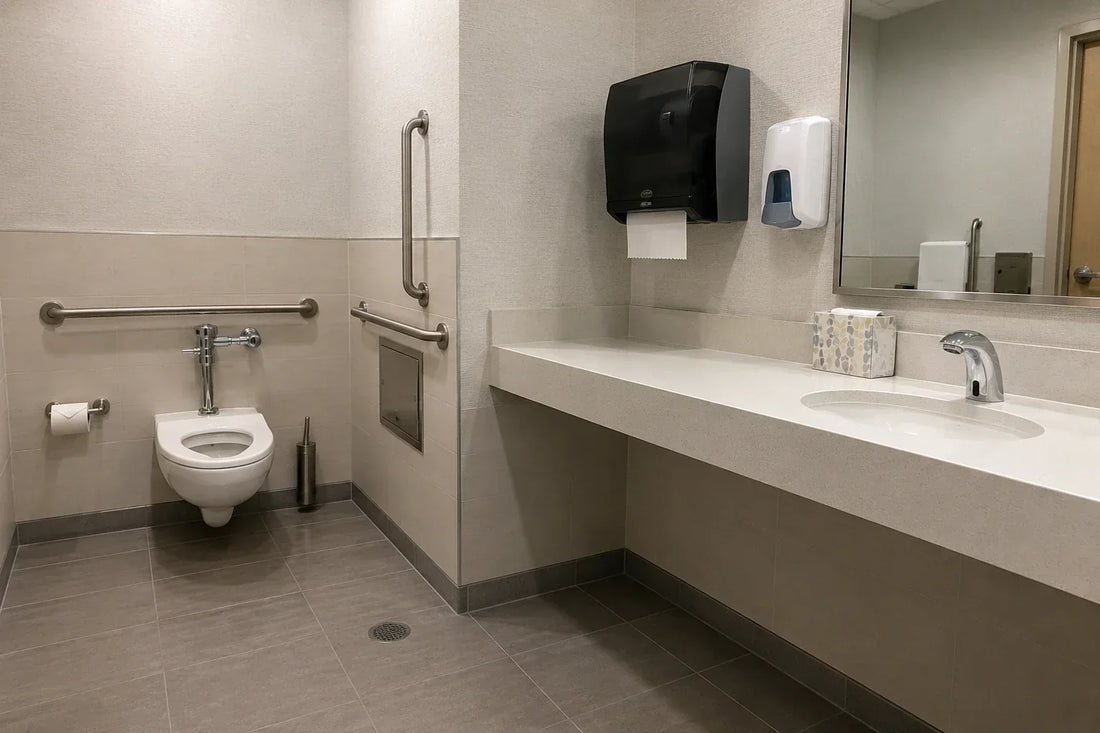
Touchless faucets, soap dispensers, flush systems, and paper towel dispensers reduce contact with shared surfaces and help minimize cross-contamination. These fixtures also improve accessibility and support better infection prevention in high-traffic hospital restrooms.
Use Flushable Toilet Seat Covers
Flushable toilet seat covers provide an additional hygienic barrier between users and shared toilet seats. In hospitals, they can improve user confidence while supporting overall restroom hygiene.
Flushable options, such as LooREADY Flushable Toilet Seat Covers, offer a convenient solution for high-traffic healthcare facilities when used as part of a broader cleaning and disinfection program. Learn more about LooREADY Flushable Toilet Seat Covers and how they can support hygiene in high-traffic shared restrooms.
Many people worry about germs on shared toilet seats. Our article Are Public Toilet Seats Really Dirty? explains what research says and how to reduce exposure.
Conclusion
Hospital toilet hygiene plays an important role in creating a safer healthcare environment for patients, visitors, and medical staff. Consistent cleaning, proper disinfection, reliable hygiene supplies, and regular restroom inspections help reduce the risk of cross-contamination while improving the overall restroom experience. Simple measures such as touchless fixtures, good hand hygiene, and flushable toilet seat covers can further support infection prevention as part of a comprehensive restroom hygiene program. By maintaining high standards of cleanliness, hospitals can provide safer, more hygienic facilities that inspire confidence in everyone who uses them.


