
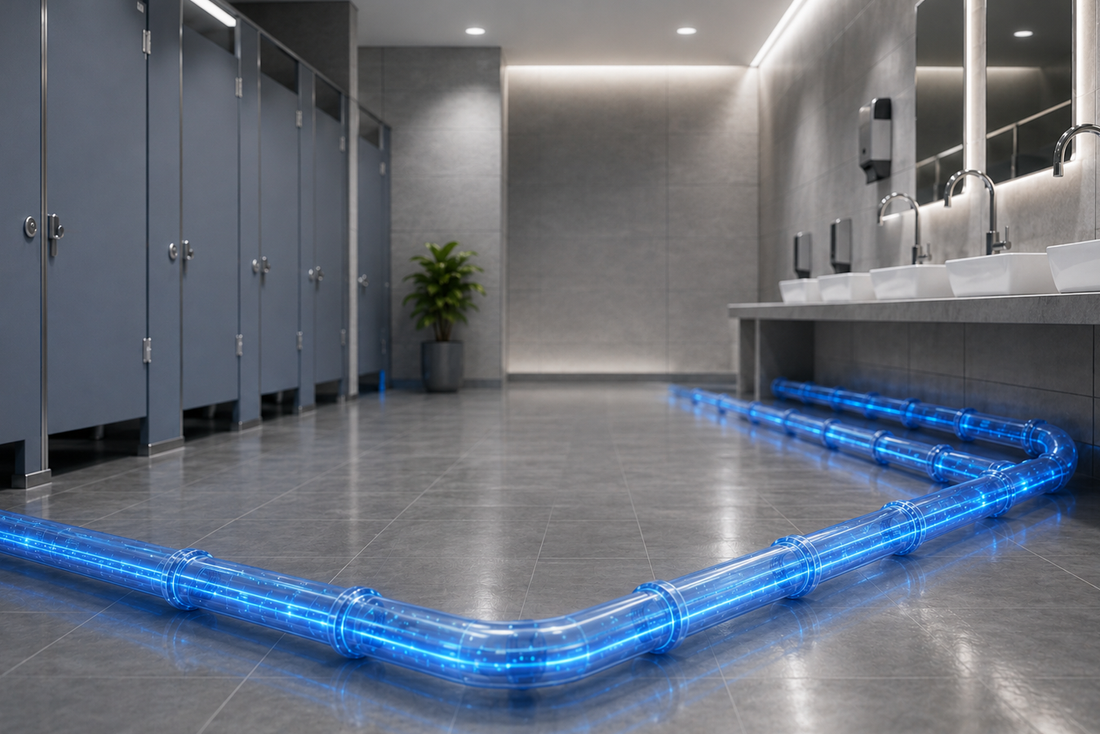
You're in a public restroom, you pull out a flushable toilet seat cover, lay it down, do your business, and flush. Gone in seconds. But have you ever actually wondered where it goes after that? What happens to it on its journey through the pipes, the sewage system, and eventually the treatment plant?
Most of us never think twice about it. We assume "flushable" means it just disappears, no harm done. But the truth is a little more complicated, and if you're someone who cares about public restroom hygiene, the environment, or simply wants to make smarter choices for your home and travel bag, it's worth understanding what actually happens.
This article breaks it all down in simple terms, so the next time you reach for a flushable toilet seat cover, you'll know exactly what you're flushing and why it matters.
Table of Contents
- What Are Flushable Toilet Seat Covers Made Of?
- The Journey: From Toilet Bowl to Treatment Plant
- Why "Flushable" Doesn't Always Mean What You Think?
- Are Flushable Toilet Seat Covers Actually Good for the Environment?
- Why People Reach for These Covers in the First Place?
- How to Make Sure You're Choosing the Right One?
- A Quick Myth-Buster
- The Bottom Line
| What is a flushable toilet seat cover?
A flushable toilet seat cover is a disposable paper liner designed to provide a hygienic barrier between the user and the toilet seat while breaking down quickly in water after flushing. |
What Are Flushable Toilet Seat Covers Made Of?
Before we talk about what happens after flushing, let's quickly cover what these products actually are. Flushable toilet seat covers are thin sheets made from paper-based or biodegradable materials designed to break down quickly in water. Unlike plastic disposable toilet seat liners, which are coated to repel moisture, genuine flushable versions use a different kind of fiber structure altogether.
Many quality manufacturers use a special blend of plant-based pulp that is engineered to disintegrate within seconds of contact with water. This is very different from regular tissue paper or paper towels, which can take much longer to break apart and may cause clogs if flushed.
Because they're made from biodegradable paper pulp rather than plastic-coated materials, genuine flushable toilet seat covers are designed to dissolve much more quickly in water than many other disposable hygiene products.

The Journey: From Toilet Bowl to Treatment Plant
In most cases, this journey begins within seconds of flushing, although the exact travel time depends on the plumbing system, wastewater network, and distance to the treatment facility.
Step 1: The Flush
The moment you flush, water rushes into the bowl and carries everything through the trapway and into your home's plumbing. A genuinely flushable paper toilet seat cover begins breaking down quickly on contact with water because of how it's manufactured. The fibers are held together loosely enough that the force of water and the natural agitation in the pipes start breaking them apart within moments.
Step 2: Through the Pipes
This is where the real difference between flushable and non-flushable products becomes obvious. Pipes are not perfectly straight; they have bends, joints, and varying widths. If a product doesn't break down quickly, it can snag on rough spots inside the pipe or tangle with other debris, leading to blockages over time.
A well-made biodegradable toilet seat cover continues to break apart as it travels, turning into small fragments that move along with the wastewater instead of clumping together. This is the entire point of flushable design; it's meant to behave more like toilet paper than like a wipe or plastic liner.
This rapid disintegration is one reason properly manufactured flushable toilet seat covers are far less likely to contribute to pipe blockages than products that stay intact for longer, such as many disposable wipes.
Step 3: The Sewer System or Septic Tank
Once it leaves your home, the wastewater (and whatever remains of the cover) heads either to a municipal sewer system or a private septic tank, depending on where you live.
In a sewer system, everything eventually reaches a treatment plant, where solids are filtered out, broken down, and processed. Paper-based products that disintegrate properly pass through screening equipment without much trouble. They essentially get treated like any other organic waste material.
In a septic system, things work a little differently. Because many homeowners wonder whether flushable toilet seat covers are safe for septic systems, it's worth knowing that paper-based products designed to break down quickly are generally more compatible with healthy septic processes than products containing plastic fibers. However, it's still important to follow the manufacturer's guidance and local recommendations.
Step 4: Wastewater Treatment
At the treatment facility, water goes through several stages, including screening, settling, biological treatment, and disinfection. Anything that has fully disintegrated by this point becomes part of the organic solid waste that is separated for further processing.
Genuine flushable toilet seat covers are designed to disperse quickly after flushing, breaking down into much smaller paper fibers that move more naturally through wastewater treatment systems than materials that remain largely intact.
At a Glance
A quality flushable toilet seat cover:
- Starts breaking down within moments of flushing
- Continues dispersing as it moves through the plumbing
- Passes through wastewater treatment as rapidly dispersing paper fibers
- Is designed to minimize disruption to wastewater systems when used as directed
Why "Flushable" Doesn't Always Mean What You Think?
Many wipes marketed as "flushable" have caused costly sewer blockages because they remain largely intact after flushing. Several wastewater organizations have reported that products labeled "flushable" don't always break down quickly enough, leading to costly sewer system maintenance.
This is why the word "flushable" alone isn't enough. The material and manufacturing process matter. Genuine paper toilet seat covers designed for flushing use biodegradable paper fibers that disperse much more rapidly in water than products containing synthetic materials.
So, are flushable toilet seat covers really flushable? The answer depends on how they're made. Products manufactured from biodegradable paper pulp are designed to disperse quickly in water, while some products marketed as "flushable" may not break down as effectively.
| 💡 Did You Know?
Many people assume all products labeled "flushable" behave the same after flushing. In reality, how quickly a product disperses depends largely on the materials and manufacturing process. That's why it's important to choose products specifically designed to break down rapidly in water. |

Are Flushable Toilet Seat Covers Actually Good for the Environment?
This is a common question, especially for environmentally conscious buyers. The answer is that it depends on the materials and the disposal method.
Genuinely biodegradable toilet seat covers made from natural pulp are generally considered a more environmentally responsible alternative to plastic-coated disposable liners because they are designed to break down more readily under appropriate conditions. When you flush a quality paper-based cover, it disintegrates and gets processed along with other organic waste, eventually becoming part of treated sludge or compost material, rather than sitting in a landfill as plastic waste.
Because they are made from paper-based fibers rather than plastic coatings, they are designed to break down more readily during wastewater treatment under appropriate conditions.
That said, the most eco-conscious choice is still to use these covers only when necessary, such as in public restrooms where hygiene is a real concern, rather than as a daily habit at home. For everyday use, your regular toilet seat is perfectly fine to sit on directly.
Why People Reach for These Covers in the First Place?
Let's take a step back and talk about why disposable toilet seat liners exist at all. Public restrooms in places such as airports, malls, restaurants, offices, and transport hubs are shared by many different users throughout the day. Even with regular cleaning, many people simply feel more comfortable with a barrier between themselves and the seat.
This is especially true for:
- Travelers who are constantly using unfamiliar restrooms during flights, road trips, or while exploring new cities.
- Parents are managing young children in public restrooms, where minimizing contact with germs feels like a top priority.
- Women who often carry personal hygiene essentials and appreciate an added layer of cleanliness when using public restrooms.
- Frequent public restroom users, like commuters, gym-goers, or anyone who spends a lot of time outside the home.
- Hygiene-conscious individuals who simply prefer a clean, fresh barrier every time, regardless of how clean a restroom looks.
For all these people, a flushable paper toilet seat cover offers a quick, convenient solution that doesn't require carrying anything bulky or worrying about disposal afterward, since it's designed to be flushed away immediately.
How to Make Sure You're Choosing the Right One?
If you want a product that actually does what it claims, here's what to look out for:
- Check the material. Look for covers made from pure paper pulp rather than plastic-coated paper. True paper toilet seat liners should feel light and slightly textured, not glossy or plasticky.
- Look for biodegradable certification or clear labeling. Reputable brands will be transparent about how their product breaks down and what it's made from.
- Avoid bulk, ultra-cheap options without clear sourcing. If a brand doesn't explain its materials or manufacturing standards, that's a red flag.
- Look for products specifically labeled as flushable and made from biodegradable paper pulp rather than plastic-coated materials.
Many sustainability experts recommend choosing products made from renewable paper fibers over single-use plastics where practical, because paper-based materials are typically designed to biodegrade more readily under appropriate conditions.
Choosing a trusted, quality-tested brand such as LooREADY helps ensure you're using toilet seat covers designed with both hygiene and responsible disposal in mind.
A Quick Myth-Buster
Myth: All paper products are safe to flush.
Truth: Only products specifically designed and tested as flushable break down fast enough. Regular tissues, napkins, or paper towels are not built for this and can cause clogs.
Myth: Flushable covers will damage your home plumbing.
Truth: Genuine, well-manufactured flushable toilet seat covers are designed to be safe for standard plumbing systems, including most septic tanks, when used as directed.
Myth: They sit in landfills like plastic wipes.
Truth: When properly flushed and broken down, paper-based covers become part of the wastewater treatment process, not landfill waste.
The key takeaway is simple: when choosing a flushable toilet seat cover, the material matters just as much as the label. Products designed with rapidly dispersing paper fibers are very different from items that remain intact long after flushing.
The Bottom Line
So, what really happens after you flush a flushable toilet seat cover? In short, a quality product starts breaking apart the moment it touches water, travels through your plumbing in small, harmless fragments, and gets processed at the treatment plant just like other organic waste. It's a quick, hygienic, and relatively eco-friendly solution, as long as you're choosing a product that's genuinely built for the job.
Not all flushable products are created equal, so it pays to choose a trusted brand that uses real biodegradable materials rather than cheap imitations. The next time you reach for a toilet seat cover in a public restroom, you'll know exactly what happens next, and you can make that choice with a little more confidence.
Whether you're traveling, using a busy public restroom, or simply looking for a more hygienic experience, choosing a high-quality paper-based toilet seat cover from a trusted brand like LooREADY helps ensure you're making a choice that's better for both convenience and responsible disposal.


