
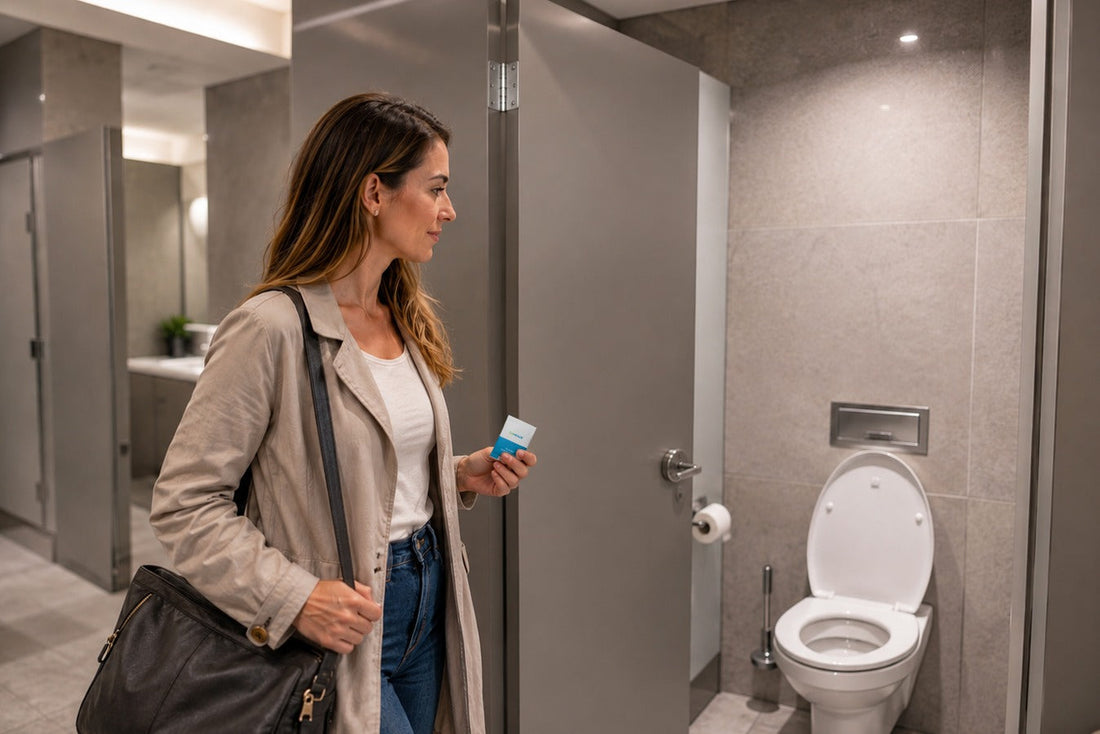
You are in an airport restroom, a motorway service station, or a busy shopping centre. The toilet looks clean enough, but you still hesitate before sitting down. A disposable seat cover feels like the simple answer. Then you notice the word “flushable” on the pack and wonder: can it really go down the toilet?
It is a fair question. Consumers have become cautious about flushable claims because many soft, thin, or disposable products do not behave like toilet paper once they enter a drain. The important point is that not all bathroom hygiene products are made in the same way.
| Quick Answer
Are flushable toilet seat covers actually flushable? Flushable toilet seat covers are actually flushable when they are specifically designed to disperse in water and are used according to the manufacturer's instructions. However, not every disposable toilet seat cover is flushable, so always check the product's materials and disposal guidance before flushing. |
Here is what travelers, parents, women, and hygiene-conscious shoppers need to know before choosing or flushing a toilet seat cover.
Key Takeaways
- A cover is suitable for flushing only when it is specifically designed to break down or disperse in water after use.
- “Disposable” and “flushable” do not mean the same thing.
- Plastic toilet seat covers should not be flushed.
- A well-designed flushable toilet seat cover should remain intact during use, then disperse in water after flushing according to the manufacturer's instructions.
- Check materials and manufacturer instructions before flushing any toilet seat cover.
- Individually wrapped covers can be practical for travel, family outings, and frequent public restroom use.
Table of Contents
- What Does "Flushable" Actually Mean?
- Why Is There So Much Confusion About Flushable Products?
- Myth vs. Fact: Flushable Toilet Seat Covers
- How Flushable Toilet Seat Covers Work?
- Flushable vs Paper vs Plastic Toilet Seat Covers
- Can Flushable Toilet Seat Covers Clog a Toilet?
- Are Flushable Toilet Seat Covers Better for Travelers?
- How to Tell If a Toilet Seat Cover Is Designed to Be Flushed?
- Signs a Toilet Seat Cover Should NOT Be Flushed
- What About the Environmental Impact?
- How to Use a Flushable Toilet Seat Cover Correctly?
- So, Are Flushable Toilet Seat Covers Actually Flushable?
- Reference Notes for Editorial Fact-Checking
What Does “Flushable” Actually Mean?
For most people, flushable means a product disappears when the toilet is flushed. But leaving the bowl is only the beginning of its journey.
After flushing, material moves through plumbing and into a sewer or septic system. Something can pass through the visible toilet opening yet remain intact further down a pipe. This is why wastewater guidance is cautious about wipes and other non-flushable hygiene products. The U.S. Environmental Protection Agency, for example, has warned against flushing disinfecting wipes and other non-flushable items because they can affect plumbing, sewers, and septic systems.
Quick Fact
The U.S. Environmental Protection Agency (EPA) advises that toilet paper is generally the only product that should be flushed unless another product has been specifically designed and labelled for flushing. Many disposable hygiene products, including wipes and plastic-based items, can contribute to plumbing problems, sewer blockages, and septic system issues when flushed improperly.
For a toilet seat cover, the better question is: was this product intentionally designed to lose its structure and disperse in water after flushing?
That distinction matters. A plastic sheet may disappear from sight, but plastic does not become plumbing-friendly simply because it fits through the toilet trap. Flushable toilet seat covers should be judged by material design and stated disposal instructions, not appearance alone.
Why Is There So Much Confusion About Flushable Products?
Wipes, liners, tissues, sanitary products, paper covers, and plastic covers can all look lightweight. Yet they behave very differently in water. Because traditional public restroom covers are often thin paper, shoppers may assume every toilet seat cover can be flushed.
That assumption can be wrong. “Disposable” only means a product is intended for single or limited use. It does not tell you where to dispose of it.
A simple rule helps: if a product does not clearly say it is designed to be flushed, do not use the toilet as a disposal bin. Read the pack or manufacturer's instructions first.
Myth vs. Fact: Flushable Toilet Seat Covers
Many shoppers assume all toilet seat covers can be flushed because they look similar. In reality, the material and the manufacturer's instructions, not the appearance, determine how a cover should be disposed of.
| Myth | Fact |
|---|---|
| All paper toilet seat covers are flushable. | Not necessarily. Some paper covers are designed for flushing, while others should be disposed of in a waste bin. Always follow the manufacturer's instructions. |
| Disposable means flushable. | False. "Disposable" simply means the product is intended for single use. It does not indicate how it should be disposed of. |
| If a toilet seat cover is thin, it is safe to flush. | Not always. Thickness alone does not determine flushability. Material construction and water-dispersal design are what matter. |
| Plastic toilet seat covers can be flushed. | No. Conventional plastic toilet seat covers should never be flushed because they do not break down in water. |
| If a product disappears from the toilet bowl, it must be safe for plumbing. | Not necessarily. A product may leave the bowl but remain intact in pipes or wastewater systems if it is not designed to disperse after flushing. |
How Flushable Toilet Seat Covers Work?
A well-designed flushable cover has a difficult job. It must remain stable while being unfolded, positioned, and used. At the same time, it should be designed to break down or disperse after entering the flushing environment.
This is where material design and engineering matter more than simply making a cover thin.
LooREADY describes its flushable toilet seat covers as a multi-layer design using wood pulp and a proprietary biodegradable ecopolymer material. According to the brand’s product and materials information, the cover forms a barrier during use and is designed to disperse after flushing. The individual wrapper goes in the waste bin.
If available, manufacturers should also provide information about any recognized dispersibility or biodegradability testing used to support their flushable claims.
This strength-then-dispersal approach is what consumers should look for: useful during the hygiene task, followed by a designed change in behaviour after flushing. A purpose-designed cover should not be compared with a random sheet of plastic or ordinary paper simply because the products look similar.
Flushable vs Paper vs Plastic Toilet Seat Covers
The main types of toilet seat covers have different strengths and disposal considerations.
| Cover type | Typical benefit | Main concern | Flush? |
|---|---|---|---|
| Purpose-designed flushable cover | Convenient barrier and easy disposal | Must be designed to disperse in water | Follow the maker's instructions |
| Thin paper cover | Lightweight and common | May tear, move, or absorb moisture | Check product guidance |
| Plastic cover | Moisture-resistant barrier | Plastic waste and plumbing risk | No |
| Toilet paper on the seat | Usually available | Can slip, tear, and use many sheets | Toilet paper is intended for flushing |

Choosing the right toilet seat cover involves more than simply asking whether it is flushable. Not every disposable toilet seat cover is designed to be flushed. The comparison below highlights the differences between purpose-designed flushable covers and conventional plastic alternatives.
Flushable vs Plastic Toilet Seat Covers: Feature Comparison
Not every disposable toilet seat cover is designed to be flushed. The table below highlights the differences between purpose-designed flushable covers and conventional plastic alternatives.
| Feature | Purpose-Designed Flushable Toilet Seat Cover | Plastic Toilet Seat Cover |
|---|---|---|
| Designed to disperse in water | ✔ Yes, when specifically designed and labelled as flushable | ✖ No |
| Intended for flushing | ✔ Follow the manufacturer's instructions | ✖ Never |
| Barrier protection | ✔ Yes | ✔ Yes |
| Water resistant during use | ✔ Designed to remain effective during normal use | ✔ Yes |
| Biodegradable options available | ✔ Some products | ✖ Generally no |
| Suitable for travel | ✔ Yes | ✔ Yes |
| Individually wrapped options | ✔ Available | ✔ Available |
| Risk of plumbing problems if flushed | Low when used exactly as directed | High |
| Best disposal method | Flush only if the manufacturer instructs you to do so | Dispose of in a waste bin |
The safest approach is to choose a toilet seat cover that clearly explains its materials, disposal method, and intended use rather than assuming all disposable covers can be flushed.
Can Flushable Toilet Seat Covers Clog a Toilet?
Plumbing systems vary. Old pipes, existing blockages, septic conditions, and people flushing inappropriate products can all contribute to drainage problems.
A purpose-designed flushable toilet seat cover is intended to behave differently from plastic or a durable wipe. Even so, it should be used exactly as directed. Use one cover at a time and never flush the wrapper unless the manufacturer specifically says the packaging is flushable.
If a toilet is already blocked, draining slowly, or marked with instructions not to flush disposable products, do not add a cover to the bowl. Product design and sensible use have to work together.
| Expert Insight
What Happens After the Flush Matters More Consumers often judge flushability by watching a product disappear from the bowl. From a hygiene-product perspective, the more meaningful question is what the material is designed to do after it enters water. |
A credible product explanation should tell shoppers why a cover can stay strong during use yet disperse after flushing. Clear material information and direct usage instructions are more useful than vague phrases such as “easy disposal.”
Are Flushable Toilet Seat Covers Better for Travelers?
For many travelers, they are a practical option. Public restroom conditions are unpredictable. Airports have high traffic, motorway restrooms have constant turnover, and temporary facilities may offer limited hygiene supplies.
If you're comparing travel toilet seat covers, look for products that are individually wrapped, easy to carry, and clearly explain their flushing and disposal instructions. LooREADY Flushable Toilet Seat Covers are one example designed with these features in mind.
A useful travel cover should be compact, individually wrapped, easy to unfold, and large enough to sit securely over the seat. Disposal instructions should also be clear.
LooREADY positions its toilet seat covers for this type of use. The brand describes them as pocket-sized, individually wrapped, biodegradable, and designed to break down in water after flushing. Its instructions say to place the cover on the seat with the tab nearest the user, then drop the cover into the toilet and flush after use. The paper wrapper belongs in the bin.
Expert Buying Tip: “Flushable” Should Not Be Your Only Buying Question
Flushability matters, but it is not the whole hygiene experience. A cover that tears while unfolding, slips into the bowl, or falls apart too early may be frustrating.
A better checklist includes barrier design, fit, strength during use, individual wrapping, portability, material transparency, and disposal. The best option should make sense from the moment you take it out of your bag to the moment you leave the restroom.
How to Tell If a Toilet Seat Cover Is Designed to Be Flushed?
You do not need to be a materials scientist. Use these practical checks:
- Look for direct flushing instructions. The manufacturer should clearly explain what to do with the used cover.
- Check the material description. If the manufacturer provides detailed information about its materials, review it before deciding whether the cover is suitable for flushing.
- Separate the cover from its packaging. A flushable cover does not mean its sachet, box, or wrapper can be flushed.
- Never flush conventional plastic covers.
- If you use a septic system, check both the product guidance and the recommendations for your system.
- Use one cover as directed. Do not flush stacks of covers with wipes, sanitary products, or other non-flushable waste.
Signs a Toilet Seat Cover Should NOT Be Flushed
Just because a toilet seat cover is disposable does not mean it belongs in the toilet. If you're unsure whether a product is safe to flush, look for these warning signs before using it:
- It contains plastic or polyethylene. Conventional plastic materials do not disperse in water and should never be flushed.
- The packaging never mentions "flushable." If the manufacturer does not clearly state that the cover is designed for flushing, assume it should go in a waste bin.
- The disposal instructions say, "Bin after use." Always follow the manufacturer's guidance rather than making assumptions based on appearance.
- The cover is thick, waterproof, or designed to stay intact after use. Products made to resist water are generally not intended to break down in plumbing systems.
- There is no information about water dispersibility or how the material behaves after flushing. Reputable manufacturers typically explain how a purpose-designed flushable product is intended to disperse in water.
When in doubt, treat the cover as non-flushable. Checking the packaging takes only a few seconds and can help prevent plumbing problems and unnecessary strain on wastewater systems.
What About the Environmental Impact?
Environmentally conscious consumers are right to question single-use products. However, it is equally important not to assume every paper-looking product is sustainable, or every flushable product has the same environmental profile.
Material choice, conventional plastic content, packaging, biodegradability, and post-use behaviour all matter. To learn more about the biodegradable materials used in LooREADY Flushable Toilet Seat Covers, visit our ‘Our Materials’ page.
LooREADY states that its proprietary ecopolymer material uses water-soluble, biodegradable, non-toxic components and that its protective material has undergone international standardized biodegradation testing. The brand also states that its packaging is paper-based and plastic-free.
How to Use a Flushable Toilet Seat Cover Correctly?
Open the individual wrapper and keep the wrapper out of the toilet. Place the cover fully over the toilet seat according to the product instructions. With LooREADY, the tab is positioned nearest to the user, and the brand states that either side can face upward.
Use the toilet normally. If the cover is specifically designed and instructed to be flushed, drop it into the bowl after use and flush. Put the wrapper in the waste bin.

So, Are Flushable Toilet Seat Covers Actually Flushable?
Yes, when a toilet seat cover has been specifically designed for flushing and is used according to the manufacturer’s instructions. But not every disposable toilet seat cover belongs in the toilet.
The key difference is material behaviour. Plastic covers should not be flushed. Generic paper covers should be used according to their disposal guidance. Purpose-designed flushable toilet seat covers are made with post-use water dispersal in mind.
The smart approach is simple: check the materials, read the instructions, keep the packaging out of the toilet, and choose a product that clearly explains how its flushable design works.
By choosing a purpose-designed flushable toilet seat cover and following the manufacturer's instructions, you can improve personal hygiene while disposing of the product responsibly.
If you are comparing travel toilet seat covers, explore LooREADY Flushable Toilet Seat Covers and review the product’s material and usage information before your next trip or public restroom visit.
Reference Notes for Editorial Fact-Checking
- U.S. Environmental Protection Agency - EPA Encourages Americans to Only Flush Toilet Paper.
- LooREADY - Flushable Toilet Seat Covers product page.
- LooREADY - Our Materials.


