
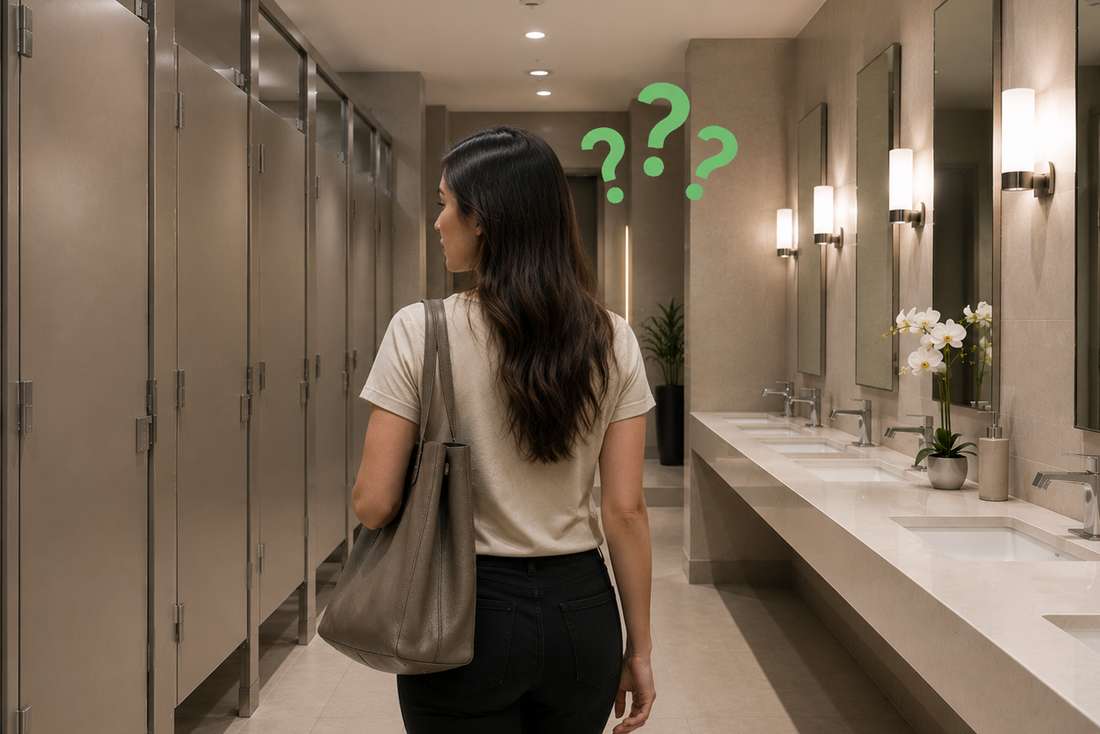
Are Toilet Seat Covers Sanitary or Is Toilet Paper Safer in Public Restrooms?
|
Quick Answer
Most people have used toilet paper as a makeshift toilet seat cover at some point. It feels safer, especially in busy public restrooms where cleanliness can be unpredictable. But toilet paper was never really designed to work as a hygiene barrier. It tears easily, absorbs moisture quickly, and often shifts out of place. Disposable toilet seat covers, on the other hand, are specifically designed to create a cleaner and more consistent barrier between you and the seat. |
Key Takeaways
- Public restrooms contain bacteria and germs on seats, flush handles, door handles, and other high-touch surfaces.
- Germ exposure typically occurs through contact with contaminated surfaces and poor hand hygiene.
- Toilet seat covers help reduce direct skin contact with toilet seats.
- Toilet paper provides inconsistent protection and absorbs moisture quickly.
- Seat covers do not kill germs but help prevent contact exposure.
- Properly used disposable toilet seat covers are considered a more hygienic option than toilet paper.
- Frequent travelers, women, parents, and commuters benefit most from carrying disposable seat covers.
Table of Contents
- How Dirty Are Public Restrooms Really?
- How Germs Spread in Public Toilets?
- What Are Toilet Seat Covers?
- Are Toilet Seat Covers Sanitary?
- Do Toilet Seat Covers Actually Protect from Germs?
- Toilet Paper vs Toilet Seat Covers
- Why Toilet Paper Feels Safe but Isn’t Fully Protective?
- Common Public Restroom Hygiene Misconceptions
- Real-Life Use Cases
- Pros and Cons
- Common Mistakes People Make
- Final Verdict
- Frequently Asked Questions
- Recommended Hygiene Solution
How Dirty Are Public Restrooms Really?
If you've ever walked into an airport restroom, looked at the toilet seat, and wondered whether it's actually clean, you're not alone.
Public restrooms can look perfectly clean while still being heavily used throughout the day. In places like airports, train stations, malls, and office buildings, restroom surfaces are touched constantly, which naturally increases hygiene concerns for many people.
The highest-risk areas often include:
- Toilet seats
- Flush buttons and handles
- Door handles
- Faucet handles
- Countertops
- Baby changing stations
A restroom may appear spotless while still containing invisible microorganisms. Visual cleanliness doesn’t always reflect how frequently a restroom has been used throughout the day.
High-traffic environments naturally experience greater contamination because more users mean more opportunities for bacteria and viruses to spread.
This is why public restroom hygiene remains a concern even in well-maintained facilities.
How Germs Spread in Public Toilets?
Understanding how germs spread helps answer the question: Are toilet seat covers sanitary?
In shared restrooms, contamination usually spreads through repeated contact with high-touch surfaces and poor hand hygiene habits.
1. Surface Contact
When multiple people touch the same surfaces throughout the day, bacteria and viruses can accumulate on those areas.
Common contact points include:
- Toilet seats
- Flush buttons
- Stall locks
- Door handles
- Sink fixtures
2. Aerosol Flushing
When a toilet is flushed, microscopic droplets can become airborne. This phenomenon is often referred to as a “toilet plume.”
These tiny droplets may settle on nearby surfaces, including:
- Toilet seats
- Stall walls
- Floors
- Personal belongings
3. Hand Contamination
Hands are one of the most common vehicles for transferring germs.
People frequently touch contaminated surfaces and then touch:
- Phones
- Bags
- Food
- Faces
4. Face and Mouth Transfer
The final stage occurs when contaminated hands touch the eyes, nose, or mouth, increasing the chances of transferring bacteria from surfaces to yourself.
Germ Transfer Diagram
Toilet Surface → Hands → Face → Infection Risk
This chain highlights why hygiene barriers and proper handwashing are both important.
What Are Toilet Seat Covers?
Toilet seat covers are designed to create a cleaner barrier between you and shared restroom surfaces. Instead of sitting directly on the seat, you’re using a layer specifically made for public restroom hygiene.
They are commonly used in:
- Airports
- Hospitals
- Hotels
- Shopping centers
- Schools
- Public transportation hubs
Most seat covers are made from paper or biodegradable materials, while some premium options feature moisture-resistant layers for additional protection.
Their primary purpose is simple: create a hygienic barrier between the user and potentially contaminated surfaces.
Are Toilet Seat Covers Sanitary?
That said, it helps to understand what seat covers are actually designed to do - and what they are not designed to do.
Many people assume seat covers kill bacteria or disinfect the toilet seat. That is not their function.
Instead, they work as a physical barrier.
When properly placed, a seat cover creates a layer between your skin and the toilet seat surface. This helps reduce direct exposure to contaminants that may be present.
The effectiveness of a toilet seat cover depends on:
- Complete seat coverage
- Proper placement
- Material quality
- Single-use disposal
When these factors are met, toilet seat covers are considered a sanitary option for public restroom use.
Do Toilet Seat Covers Actually Protect from Germs?

A common question people ask is whether toilet seat covers genuinely reduce exposure to germs in public restrooms.
Do toilet seat covers protect from germs?
The answer is yes, but with limitations.
Protection is physical rather than chemicals.
A disposable seat cover:
- Creates separation from contaminated surfaces
- Reduces direct skin contact
- Provides a cleaner sitting surface
- Improves hygiene confidence
However, users should understand that seat covers do not eliminate every possible germ exposure source.
For example, they cannot prevent contamination from:
- Dirty hands
- Door handles
- Flush buttons
- Personal belongings placed on restroom surfaces
So, while toilet seat covers help reduce exposure, they should be viewed as one component of a complete restroom hygiene routine.
Toilet Paper vs Toilet Seat Covers

Many people place toilet paper on the seat when disposable covers are unavailable.
But is toilet paper equally effective?
Let’s compare.
| Factor | Toilet Seat Covers | Toilet Paper |
|---|---|---|
| Germ Barrier | High | Low |
| Moisture Resistance | High | Low |
| Coverage | Full Seat | Partial |
| Hygiene Consistency | High | Variable |
| Ease of Use | Easy | Moderate |
| Travel Suitability | Excellent | Average |
Barrier Consistency
Seat covers are specifically designed to cover the seat.
Toilet paper often shifts, tears, or leaves gaps.
Moisture Resistance
Moisture weakens toilet paper quickly.
Many seat covers maintain better structural integrity.
Coverage Reliability
A properly sized seat cover provides more complete protection.
Toilet paper usually requires multiple layers and still leaves exposed areas.
Hygiene Confidence
People generally feel more comfortable using a dedicated hygiene product rather than improvising with toilet paper.
Why Toilet Paper Feels Safe but Isn’t Fully Protective?
When a public restroom doesn't provide toilet seat covers, many people instinctively reach for toilet paper. It's a habit we've all seen or probably done ourselves. Placing a few sheets on the seat can make it feel cleaner and more comfortable, especially when you're unsure how many people have used the restroom before you.
Psychological Comfort
Part of the reason toilet paper is so commonly used is that it creates a sense of reassurance. Having a barrier between you and the toilet seat simply feels more hygienic than sitting directly on the surface. While that extra layer can provide peace of mind, it's important to remember that feeling protected and being fully protected aren't always the same thing.
Toilet paper wasn't designed to act as a hygiene barrier. Because toilet paper is made to dissolve quickly, it often loses structure almost immediately when exposed to moisture or movement.
Moisture Problems
Toilet paper may seem like a quick solution, but it isn't designed to act as a protective barrier. If the seat is even slightly damp, the paper can absorb moisture almost immediately and start breaking down. What began as a layer of protection can quickly become thin, fragile, and far less effective than intended.
Inconsistent Layering
When people use toilet paper as a seat cover, there's no standard way to do it. Some place a single layer over the seat, while others keep adding layers until they feel comfortable. Because everyone does it differently, the level of protection can vary significantly from person to person.
Coverage Gaps
Most people use toilet paper on the seat because it feels more hygienic in the moment. The problem is that it shifts easily, tears quickly, and rarely stays fully in place during use.
Common Public Restroom Hygiene Misconceptions
Myth #1: The Toilet Seat Is the Dirtiest Surface
Not necessarily.
Research and hygiene experts often identify door handles, faucet handles, and flush buttons as higher-contact surfaces.
Myth #2: Squatting Is Always More Hygienic
Many people avoid sitting entirely.
However, squatting can increase instability and may lead to accidental contact with surrounding surfaces.
Myth #3: Toilet Paper Is Just as Good as Seat Covers
Toilet paper can help in a pinch, but it generally offers less consistent protection than a purpose-built seat cover.
Myth #4: Clean-Looking Means Germ-Free
A restroom can appear spotless while still containing microscopic contaminants.
Visual inspection cannot determine microbial safety.
Real-Life Use Cases
Some people rely on public restrooms occasionally, while others use them constantly throughout the week. For frequent users, small hygiene habits often become part of their routine.
Airport Travelers
Travelers often encounter multiple public restrooms during long journeys.
Disposable seat covers provide convenient, portable protection.
Women Using Public Restrooms
Many women prefer an additional hygiene barrier, particularly in high-traffic facilities.
Parents With Children
Children frequently touch surfaces and may not practice ideal hygiene habits.
Seat covers can provide added peace of mind.
Pregnant Users
People who are more hygiene-conscious or using public restrooms more frequently often prefer an additional hygiene barrier in shared facilities.
|
Expert Hygiene Insight
Hygiene specialists often point out that hands, not toilet seats are usually the biggest source of germ transfer inside public restrooms. |
The greatest infection risk usually comes from contaminated hands rather than toilet seats.
This means the most effective hygiene strategy includes:
- Using a toilet seat cover
- Avoiding unnecessary surface contact
- Washing hands thoroughly
- Using hand sanitizer when appropriate
Barrier products can also improve confidence and encourage healthier restroom behaviors overall.
Pros and Cons
Toilet Seat Covers
| Pros | Cons |
|---|---|
| Full barrier protection | Must be carried if unavailable on-site |
| Better hygiene consistency | Product quality varies between brands |
| Designed specifically for restroom use | |
| More reliable than toilet paper | |
| Convenient for everyday public restroom use | |
| Better suited for shared restroom environments |
Toilet Paper
| Pros | Cons |
|---|---|
| Readily available | Weak barrier protection |
| Inexpensive backup option | Tears easily |
| Absorbs moisture | |
| Inconsistent coverage |
Common Mistakes People Make
Small habits can affect how effective restroom hygiene products are during use.
These include:
- Failing to cover the entire seat
- Using only a thin layer of toilet paper
- Reusing disposable covers
- Touching contaminated surfaces immediately after placement
- Assuming visible cleanliness equals hygiene safety
- Skipping handwashing after restroom use
Proper usage is just as important as the product itself.
Final Verdict
So, are toilet seat covers sanitary?
Yes. Toilet seat covers are generally a more reliable hygiene solution than toilet paper in public restrooms because they provide consistent physical barrier protection between the user and potentially contaminated surfaces.
Public restrooms are part of everyday life, especially when traveling, commuting, or spending long hours away from home. While no hygiene solution removes every possible exposure risk, dedicated toilet seat covers offer a more consistent and practical barrier than toilet paper alone.
For many people, it’s less about fear and more about feeling more comfortable and prepared in shared restroom environments.
Recommended Hygiene Solution
If you frequently travel, commute, or rely on public restrooms, toilet paper alone may not provide the consistent hygiene protection you’re looking for.
LooREADY disposable toilet seat covers are designed for people who regularly use public restrooms and want a cleaner, more reliable hygiene option than toilet paper alone.
Compact, flushable, and individually wrapped, they’re designed to fit naturally into everyday travel, commuting, and public restroom routines.


