
| Quick Answer
What Hygiene Solutions Work Best for Commercial Toilets? If you're using a public restroom, flushable toilet seat covers are generally a better choice than toilet paper. They're designed to cover the toilet seat more effectively, stay in place during use, and are made specifically for restroom hygiene. While toilet paper can work as a temporary barrier, it often shifts, tears, or requires multiple layers. From a hygiene and convenience standpoint, flushable toilet seat covers offer a more practical solution. Just be sure to follow the manufacturer's flushing instructions and local plumbing guidelines. |
Key Takeaways
- Flushable toilet seat covers are designed specifically for public restroom hygiene.
- Toilet paper can serve as a temporary barrier but doesn't provide consistent coverage.
- Layering excessive toilet paper may contribute to plumbing problems, particularly in older systems.
- Travel toilet seat covers are lightweight, portable, and convenient for people who frequently use public restrooms.
- Good handwashing and proper restroom habits remain the most important steps for reducing germ exposure.
Table of Contents
- Introduction
- Why Do People Put Toilet Paper on Public Toilet Seats?
- What Are Flushable Toilet Seat Covers?
- Flushable Toilet Seat Covers vs. Toilet Paper: Side-by-Side Comparison
- Quick Comparison: Toilet Paper or Flushable Toilet Seat Covers?
- Which Option Offers Better Hygiene?
- Common Mistakes People Make When Using Public Toilet Seats
- Which Option Is Better for Plumbing?
- Toilet Paper vs. Toilet Seat Covers: Pros and Cons
- Which Option Is Better for Travel?
- Environmental Considerations
- When Is Toilet Paper Enough?
- When Are Disposable Toilet Seat Covers the Better Choice?
- 7 Simple Habits That Matter More Than Choosing Toilet Paper or a Seat Cover
- Final Thoughts
- People Also Search For
- Sources
Introduction
Imagine you're rushing through an airport to catch your flight. You finally find a restroom, only to discover the toilet seat cover dispenser is empty. Like many people, you grab a handful of toilet paper and begin layering it across the seat.
But have you ever wondered whether that's actually the best solution?
Flushable toilet seat covers have become increasingly popular because they're designed specifically for public restroom use. Unlike folded toilet paper, they're made to provide more complete coverage while remaining easy to use and convenient to flush according to the manufacturer's instructions.
So, which option is better?
In this guide, we'll compare flushable toilet seat covers vs. toilet paper based on hygiene, plumbing, convenience, travel, and everyday practicality. Whether you're looking for the cleanest option during your next road trip or simply wondering if toilet paper is enough, this comparison will help you make an informed choice.
Why Do People Put Toilet Paper on Public Toilet Seats?

For many people, placing toilet paper on a public toilet seat is almost automatic. It's something they've done for years without giving it much thought.
The reasons are understandable.
Most people associate public restrooms with germs, especially in busy places like airports, shopping malls, schools, stadiums, and highway rest stops. When disposable restroom seat covers aren't available, toilet paper becomes the easiest alternative.
According to the American Restroom Association, concerns about restroom cleanliness and maintenance influence how comfortable people feel using public facilities. That helps explain why many people look for simple ways to make restroom visits feel more hygienic.[1]
Some people also believe that adding several layers of toilet paper creates a protective barrier between themselves and the toilet seat. Others simply feel more comfortable sitting on paper rather than directly on the seat, even if the restroom appears clean.
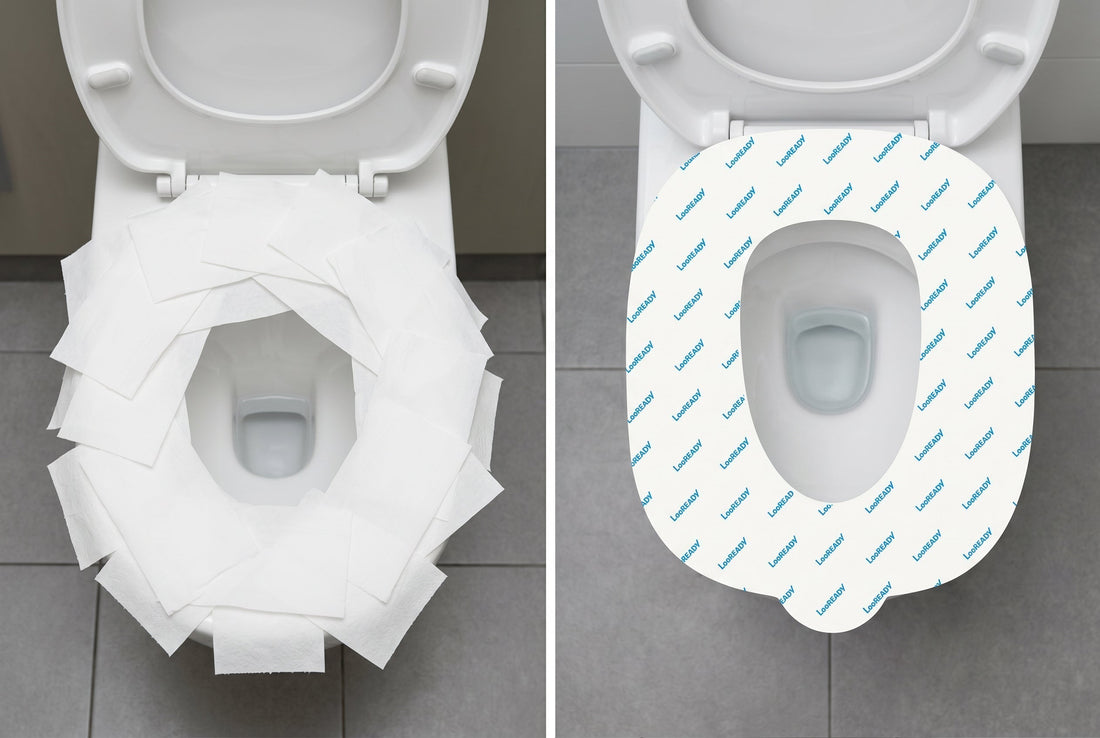
While toilet paper can provide a temporary barrier, it wasn't designed for this purpose. It tears easily, shifts when you sit down, and often leaves gaps that expose parts of the seat.
This is one reason many travelers and frequent users of public restrooms now carry travel toilet seat covers instead of relying on whatever toilet paper is available.
| Expert Insight
Public health experts generally recommend focusing on high-touch surfaces and thorough handwashing rather than relying solely on barriers placed on the toilet seat. A seat cover can add comfort and convenience, but good hygiene habits remain your best defense. |
What Are Flushable Toilet Seat Covers?
A flushable toilet seat cover is a disposable paper liner that creates a temporary barrier between you and a public toilet seat. Unlike toilet paper, it's designed specifically to fit the shape of the seat, stay in place during use, and be disposed of according to the manufacturer's instructions.
These disposable covers for toilet seats are designed to provide broader coverage than folded toilet paper while remaining easy to use in public restrooms.
Many flushable toilet seat covers are designed to break down after flushing when used according to the manufacturer's instructions. However, it's always best to follow the product's guidance and any restroom signage.
They're commonly found in:
- Airports
- Hospitals
- Schools and universities
- Office buildings
- Shopping centers
- Restaurants
- Hotels
- Transportation terminals
Many people also carry travel toilet seat covers in their purse, backpack, diaper bag, or luggage for use whenever public restroom supplies aren't available.
Most disposable toilet seat covers are made from lightweight biodegradable paper that begins to break down in water. Many are intended to be flushed after use, although it's always important to follow the manufacturer's instructions and local plumbing recommendations.
Compared with toilet paper, these toilet seat liners offer several advantages:
- Better seat coverage
- Less movement during use
- Faster placement
- Designed specifically for restroom hygiene
- Easy to carry while traveling
Rather than improvising with toilet paper, they're purpose-built to make using public restrooms more comfortable and convenient.
Did You Know?
Even if you use a toilet seat cover, proper handwashing remains one of the most effective ways to reduce everyday germ transmission after using a public restroom.
Flushable Toilet Seat Covers vs. Toilet Paper: Side-by-Side Comparison
While both options create a barrier between you and a public toilet seat, they differ significantly in design, convenience, and intended use.
| Feature | Flushable Toilet Seat Covers | Toilet Paper |
|---|---|---|
| Designed for toilet seats | ✅ Yes | ❌ No |
| Coverage | Covers most of the seat | Limited and uneven |
| Stays in place | Generally yes | Often shifts or tears |
| Convenience | Ready to use | Requires layering |
| Travel-friendly | Easy to carry | Depends on restroom supplies |
| Flushability | Designed to be flushed according to instructions | Flushable in normal amounts |
| Risk of plumbing issues | Low when used as directed | Higher if excessive amounts are flushed |
| Overall hygiene | More consistent coverage | Temporary solution |
| Best For | Frequent public restroom use, travel, and busy facilities | Temporary or emergencies |
Quick Comparison: Toilet Paper or Flushable Toilet Seat Covers?
If you're short on time, here's a quick way to decide. While both toilet paper and flushable toilet seat covers can serve as a barrier on a public toilet seat, the better choice depends on your situation, travel habits, and personal preferences.
| If you want... | Choose... | Why? |
|---|---|---|
| Better coverage | Flushable toilet seat covers | Designed to fit the toilet seat and stay in place more effectively. |
| A quick emergency solution | Toilet paper | Readily available in most public restrooms when seat covers aren't. |
| Frequent travel convenience | Travel toilet seat covers | Compact, lightweight, and easy to carry in a purse, backpack, or carry-on. |
| A product made specifically for public restrooms | Disposable toilet seat covers | Created specifically to provide a barrier between the user and the toilet seat. |
| Minimal preparation | Flushable toilet seat covers | Simply unfold and place on the seat without layering paper. |
| When no other option is available | Toilet paper | A practical temporary alternative if toilet seat covers aren't available. |
In most everyday situations, flushable toilet seat covers offer greater convenience and more consistent coverage because they're specifically designed for toilet seats. However, if you're in a restroom without seat covers, toilet paper can still serve as a practical temporary solution until a purpose-built option is available.
The biggest difference is purpose.
Toilet paper was designed for personal hygiene, not for covering toilet seats. Creating a barrier with toilet paper requires folding multiple sheets, adjusting them to fit the seat, and hoping they stay in place while you use the restroom.
Flushable and disposable toilet seat covers, on the other hand, are specifically designed for this situation. They unfold quickly, cover more of the seat, and eliminate much of the guesswork involved in creating a makeshift barrier.
For people who frequently travel or regularly use public restrooms, that added convenience can make a noticeable difference.
Our Verdict
| Category | Winner |
|---|---|
| Hygiene | ⭐ Flushable toilet seat covers |
| Convenience | ⭐ Flushable toilet seat covers |
| Travel | ⭐ Travel toilet seat covers |
| Cost | Toilet paper (already available in most restrooms) |
| Plumbing (used correctly) | Tie |
| Emergency use | ⭐ Toilet paper |
| Overall | 🏆 Flushable toilet seat covers |
Which Option Offers Better Hygiene?

When comparing hygiene, neither option guarantees complete protection from germs. However, the way each product is designed affects how well it performs as a barrier.
Toilet paper is soft and readily available, but it has limitations. Because it's thin and lightweight, it tends to slide around or tear as you sit down. Many people compensate by layering several sheets, but even then, parts of the toilet seat may remain uncovered.
Disposable toilet seat covers, by contrast, are shaped to fit the seat and provide more consistent coverage. They generally stay in place better during use and require less handling, making them a more convenient option in busy public restrooms.
It's also worth remembering that toilet seats aren't the only surfaces to consider. Flush handles, faucet handles, stall locks, countertops, and restroom door handles are touched by many people throughout the day. Good hygiene practices, such as washing your hands thoroughly, avoiding unnecessary contact with high-touch surfaces, and using paper towels to open the restroom door when possible, play a much bigger role in staying healthy than the choice between toilet paper and a seat cover alone.
For most people, flushable toilet seat covers provide a more practical and purpose-built solution, especially in high-traffic public restrooms where cleanliness may vary.
Public Restrooms Are High-Touch Environments
Rather than focusing solely on toilet seats, studies consistently show that high-touch surfaces such as flush handles, faucets, and door handles receive repeated contact throughout the day. This is why proper handwashing remains one of the most important hygiene habits regardless of whether you use toilet paper or a toilet seat cover.[3]
Check out our guide to How Dirty Are Public Toilets Really and wash your hands every time you use a toilet.
Common Mistakes People Make When Using Public Toilet Seats
Many people use toilet paper or toilet seat covers with good intentions, but a few common habits can reduce their effectiveness or create unnecessary waste. Here are some of the most common mistakes people make in public restrooms and what to do instead.
Mistake #1: Using Half a Roll of Toilet Paper as a Seat Cover
Many people believe that adding more layers of toilet paper creates better protection. In reality, several layers often slide apart as soon as you sit down, leaving parts of the toilet seat uncovered. Flushing large amounts of toilet paper afterward may also increase the risk of plumbing problems in some systems.
A better approach: If you prefer using a barrier, use a product designed specifically for toilet seats or use only the amount of toilet paper you actually need.
Mistake #2: Assuming Thicker Always Means Cleaner
It's easy to think that a thicker layer of paper automatically provides better hygiene. However, thickness doesn't necessarily improve coverage or help the paper stay in place. A toilet seat cover that fits the shape of the seat often provides more consistent coverage than folded toilet paper.
Mistake #3: Focusing Only on the Toilet Seat
Many people worry most about the toilet seat but overlook other high-touch surfaces such as stall locks, flush handles, faucet handles, soap dispensers, and restroom door handles.
Expert Tip: Washing your hands thoroughly after using the restroom is one of the most effective ways to reduce everyday germ exposure.
Mistake #4: Forgetting to Carry Hygiene Essentials While Traveling
If you frequently use public restrooms, relying entirely on what's available can be frustrating. Some restrooms run out of toilet paper, while others don't provide toilet seat covers at all.
Keeping a small pack of travel toilet seat covers, tissues, or hand sanitizer in your bag can help you feel more prepared wherever you go.
You can also check our guide on How to Use Public Toilets Safely While Traveling.
Which Option Is Better for Plumbing?
When it comes to plumbing, the answer isn't simply about what can be flushed; it's also about how much is being flushed.
Most toilet paper sold in the United States is designed to break down quickly in water and is generally safe for residential and commercial plumbing systems when used in normal amounts. However, problems can arise when large quantities are flushed at once. Layering multiple sheets of toilet paper to cover a toilet seat may increase the amount entering the plumbing system unnecessarily, especially in older buildings or facilities with aging pipes.
Plumbing professionals consistently rank flushing excessive paper and non-flushable products among the most common causes of preventable toilet blockages.[2]
Flushable toilet seat covers are specifically designed for this purpose, and many are manufactured to break down after flushing when used according to the manufacturer's instructions. However, not all products are made the same. It's important to check the packaging for flushing instructions and follow any guidance provided by the facility you're using.
Check out our guide to what really happens to flushable toilet seat covers after flushing to understand why it is a better option for plumbing.
Plumbing Tips to Keep in Mind
- Flush only products that are intended to be flushed.
- Avoid using excessive amounts of toilet paper to create a seat barrier.
- Follow the instructions provided with disposable toilet seat covers.
- If a restroom displays signs asking users not to flush certain products, dispose of them in the designated waste bin.
Bottom line: Both toilet paper and many flushable toilet seat covers can be appropriate for flushing when used as intended. The key is avoiding excessive amounts and following product and facility guidelines.
Toilet Paper vs. Toilet Seat Covers: Pros and Cons
| Toilet Paper | Flushable Toilet Seat Covers |
|---|---|
| Always available | Designed specifically for toilet seats |
| Free in most restrooms | Better coverage |
| Can shift easily | Stays in place better |
| Requires layering | Ready to use |
| May require more paper | Uses one cover |
Which Option Is Better for Travel?
If you frequently travel, convenience matters just as much as hygiene.
While toilet paper is available in almost every public restroom, the quality, quantity, and cleanliness can vary significantly. Some restrooms may have thin paper, empty dispensers, or supplies that aren't easy to use for creating a seat barrier.
This is where travel toilet seat covers become a practical addition to your travel essentials.
They're lightweight, individually packaged, and take up very little space in a purse, backpack, carry-on, or diaper bag. Having your own toilet seat liners also means you don't have to rely on whether a restroom provides seat covers or even enough toilet paper.
Travel toilet seat covers can be especially useful in places like:
- Airports
- Train and bus stations
- Highway rest stops
- Theme parks
- Stadiums and concert venues
- Shopping malls
- Schools and universities
- Campgrounds
For parents traveling with young children, carrying disposable toilet seat covers can also make restroom visits more convenient by providing a cleaner, ready-to-use barrier when public facilities are busy.
If you regularly find yourself using public restrooms away from home, keeping a small pack of travel toilet seat covers in your bag can provide added peace of mind without taking up much space.
Environmental Considerations
Many consumers today also consider the environmental impact of the products they use.
Toilet paper is an everyday necessity, but using large amounts simply to cover a toilet seat increases paper consumption without serving its intended purpose.
Many disposable toilet seat covers are made from biodegradable paper materials and are designed for single use. Some products are manufactured to break down quickly after flushing when used according to the manufacturer's instructions.
Regardless of which option you choose, responsible restroom habits help reduce unnecessary waste.
Some simple ways to be more environmentally conscious include:
- Use only the amount of toilet paper you actually need.
- Choose toilet seat covers made from biodegradable materials whenever possible.
- Follow local disposal or flushing guidelines.
- Avoid flushing products that aren't labeled as flushable.
Making informed choices helps balance personal hygiene with responsible product use.
When Is Toilet Paper Enough?
Although flushable toilet seat covers are designed specifically for public restroom hygiene, there are situations where toilet paper may be perfectly adequate.
For example:
- You're using your own restroom at home.
- You're visiting a private restroom that appears clean and well-maintained.
- A public restroom doesn't have seat covers available.
- You need a temporary solution while traveling.
In these situations, using toilet paper as a temporary barrier is a practical option if it helps you feel more comfortable.
The important thing is to avoid using excessive amounts simply to create thicker layers. More paper doesn't necessarily mean better protection and may contribute to unnecessary waste.
When Are Disposable Toilet Seat Covers the Better Choice?

There are also situations where disposable toilet seat covers offer clear advantages over folded toilet paper.
They're especially useful when you're:
- Traveling frequently
- Using busy public restrooms
- Visiting airports or transportation hubs
- Attending concerts, sporting events, or festivals
- Shopping at crowded malls
- Taking road trips
- Using restrooms at schools or universities
- Visiting hospitals or medical facilities
Because they're designed specifically for toilet seats, they provide more consistent coverage and require less preparation than layering toilet paper.
For people who use public restrooms regularly, carrying travel toilet seat covers can be a simple way to make restroom visits quicker and more convenient.
The LooREADY Tip
Build a simple restroom hygiene kit that stays in your backpack, purse, diaper bag, or carry-on. A pack of travel toilet seat covers, hand sanitizer, and tissues takes up very little space but can make public restroom visits more convenient when supplies are limited.
7 Simple Habits That Matter More Than Choosing Toilet Paper or a Seat Cover
No matter which barrier you choose, healthy restroom habits have the greatest impact on reducing everyday germ exposure.
Here are a few practical tips:
- Wash your hands with soap and water.
- Avoid touching high-contact surfaces unnecessarily.
- Flush according to the facility's setup and signage.
- Keep personal belongings off the restroom floor.
- Carry travel toilet seat covers if you frequently use public restrooms.
- Use products according to their instructions.
- Dry your hands thoroughly before leaving.
Good hygiene is built on a combination of thoughtful habits, not just one product.
Final Thoughts
Both toilet paper and flushable toilet seat covers can serve as barriers between you and a public toilet seat, but they aren't designed for the same purpose.
Toilet paper is a convenient backup when nothing else is available. However, it often requires multiple layers, can shift during use, and wasn't intended to cover toilet seats.
Disposable toilet seat covers, on the other hand, are purpose-built for public restrooms. They offer better coverage, are easy to carry while traveling, and provide a more convenient experience in high-traffic locations such as airports, shopping malls, schools, and transportation hubs.
Toilet paper has long been the default solution simply because it's almost always available. But convenience doesn't necessarily mean it's the best tool for the job.
If you frequently use public restrooms, whether you're commuting, traveling, or running errands, a product designed specifically for toilet seats can provide a more consistent and convenient experience.

The best choice isn't about fear of germs. It's about being prepared with the right solution for the situation.
The next time you walk into a public restroom with an empty seat cover dispenser, you'll know that toilet paper is a practical backup, but not necessarily the best long-term solution. Keeping a small pack of LooREADY travel toilet seat covers in your bag can make public restroom visits quicker, more comfortable, and more convenient wherever you go.
The next time you find yourself in a public restroom with an empty toilet seat cover dispenser, you'll know exactly when toilet paper is a practical backup and when carrying your own seat covers makes more sense.
People Also Search For:
- How to Avoid Germs in Public Bathrooms?
- Are Toilet Seat Covers Sanitary?
- How to Avoid Germs & Stay Comfortable?


