
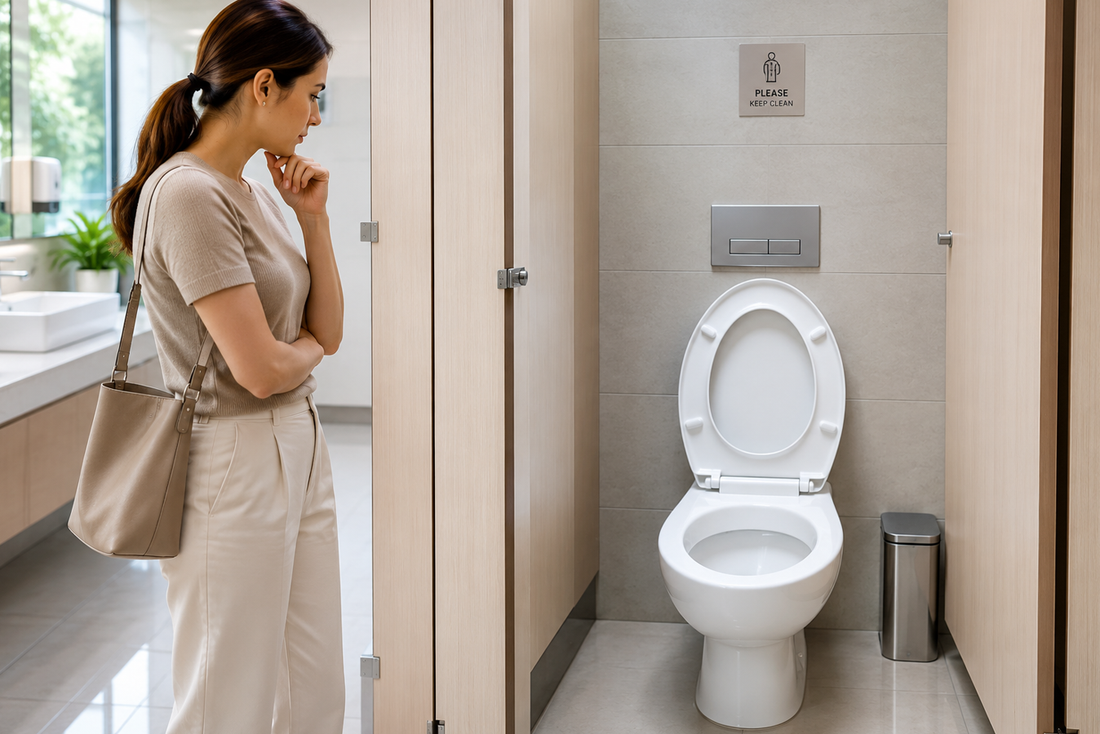
Most of us have a routine when we walk into a public restroom.
Some people hover. Some layer toilet paper across the seat. Others just try to get in and out as quickly as possible.
Very few people sit down without thinking twice.
And honestly, that instinct isn’t wrong.
Public toilets are shared spaces. They’re used constantly, often faster than they can realistically be cleaned. So, the real question isn’t “Are they dirty?”; it’s “How risky are they, and are we dealing with it the right way?”
So, are public toilet seats really dirty? Yes, public toilet seats can contain bacteria and other microorganisms. However, for most healthy individuals, the risk of becoming ill from simply sitting on a toilet seat is generally low. Good hand hygiene and avoiding contact with contaminated surfaces often matter more than brief contact with the seat itself.
Also read: How to Use Toilets on a Plane Safely and Hygienically
Key Takeaways
- Public toilet seats can contain bacteria and other microorganisms.
- For most healthy individuals, the risk from direct seat contact is generally low.
- High-touch surfaces such as flush buttons and door handles may pose a greater hygiene concern.
- Proper handwashing remains one of the most effective ways to reduce germ exposure.
- A portable toilet seat cover can provide added comfort and peace of mind when using public restrooms.
Why Are People So Worried About Public Toilet Seats?
Many people's concerns about public toilet seats start long before they ever think about bacteria or infection risks.
Public restrooms are shared by hundreds or even thousands of people, which naturally creates concerns about cleanliness. Because germs are invisible, it's easy to assume that any frequently used surface may be heavily contaminated.
For many people, the concern is also shaped by habits learned during childhood. Advice such as placing toilet paper on the seat, avoiding direct contact, or hovering over the toilet often becomes second nature and continues into adulthood.
Public restroom experiences can reinforce those worries as well. Unpleasant odors, visible messes, or poorly maintained facilities may lead people to assume that every surface in the restroom is equally dirty.
While these concerns are understandable, the actual risks associated with public toilet seats are often different from what many people expect.
What Germs Can Be Found on Public Toilet Seats?
Public toilet seats aren't sterile, but they also aren't typically considered high-risk surfaces for most healthy individuals.
Because these surfaces are used by many people throughout the day, they can collect small amounts of bacteria commonly found in restroom environments.
Research on toilet hygiene has identified microorganisms such as E. coli, which can be associated with the digestive tract, and Staphylococcus bacteria, which are commonly found on human skin. However, the presence of bacteria on a surface does not necessarily indicate a significant health risk. [1. Abney, et al. (2021)]
Depending on the environment, restroom surfaces may also contain other microorganisms commonly found in public spaces, including certain viruses and environmental bacteria.
The amount and type of contamination can vary significantly from one restroom to another. Factors such as cleaning frequency, restroom traffic, moisture levels, and overall facility maintenance all play a role.
It's also important to remember that finding bacteria on a surface doesn't automatically mean it will cause illness. Most public restroom surfaces contain some level of microorganisms, and the actual risk depends on factors such as the type of bacteria present, the condition of the surface, and an individual's overall health.
In restrooms without toilet lids, flushing may also contribute to the spread of microscopic droplets onto nearby surfaces.
Can You Actually Get Sick from a Toilet Seat?
This is one of the most common questions people ask about public restroom hygiene.
The answer may be reassuring for many people.
For most healthy adults, the risk of simply sitting on a toilet seat is actually quite low. Your skin acts as a barrier. So casual contact alone usually isn’t enough to cause an issue.
This is largely because intact skin acts as an effective barrier against many common microorganisms found on environmental surfaces.
Risk may be slightly higher when:
- You have cuts, abrasions, or irritated skin
- Germs are transferred indirectly from contaminated surfaces to your face
- Your immune system is weakened
The bigger risk, in reality, isn’t always the seat - it’s your hands.
Handles, locks, flush buttons… those are touched constantly and often carry more contamination.
Many of these surfaces are discussed in greater detail in our guide on how dirty public toilets really are.
While public toilet seats can contain bacteria, hygiene experts generally agree that routine contact with a toilet seat presents a lower risk than many people assume. Proper handwashing and avoiding unnecessary face-touching remain among the most effective ways to reduce exposure to germs in public restrooms.
In most cases, healthy individuals are more likely to encounter germs through contaminated hands and shared surfaces than through direct contact with a toilet seat.
Public Toilet Seat Myths vs Facts

Misconceptions surround public toilet seats. Here are some of the most common myths and what current hygiene guidance suggests.
| Myth | Fact |
|---|---|
| You can easily catch an STD from a toilet seat. | Most sexually transmitted infections do not survive well on toilet seat surfaces, making transmission extremely unlikely. |
| Hovering is always more hygienic than sitting. | Hovering may reduce direct contact with the seat, but it can also lead to splashing and leave the seat less clean for the next user. |
| Toilet paper creates a complete protective barrier. | Toilet paper may provide a temporary layer, but it can shift, tear, and absorb moisture easily. |
| Toilet seats are the dirtiest surfaces in public restrooms. | Other high-touch surfaces, such as flush buttons, door handles, and faucet handles, may often experience more hand contact. |
For more common misconceptions about public restroom hygiene, see our guide to public toilet myths.
Common Public Toilet Seat Habits and Their Limitations

Let’s talk about the common habits.
Hovering
It feels safer, but it’s not ideal. It puts strain on your body and often leads to splashing, which actually makes the seat less clean for the next person.
Toilet Paper on the Seat
This is probably the most common trick. But toilet paper is thin, moves easily, and doesn’t really create a proper barrier. Plus, you’re handling it with your hands before placing it down.
Paper Seat Covers
Better than nothing - but still not great. They tear easily, don’t stay in place, and sometimes don’t flush well, especially in modern systems.
Avoiding Toilets Altogether
This might sound extreme, but a lot of people do it. And it comes with its own issues - holding it in, dehydration, discomfort. Not exactly a long-term solution.
Should You Use a Toilet Seat Cover?
Whether or not you use a toilet seat cover is often a matter of personal comfort.
For most healthy individuals, simply sitting on a public toilet seat is unlikely to cause illness. However, many people still prefer an additional barrier, especially in busy public facilities where cleaning schedules and restroom conditions can vary.
People who regularly use airports, train stations, public venues, and other high-traffic facilities often prefer carrying a portable toilet seat cover so they're not dependent on the cleanliness standards of every restroom they encounter.
Rather than replacing good hygiene habits, public toilet seat covers work best as one part of a broader approach that also includes handwashing and minimizing unnecessary contact with shared surfaces.
For additional tips, see our guide on How to Use Public Toilets Safely While Traveling.
What Should You Look for in a Public Toilet Seat Cover?
When choosing a public toilet seat cover, consider factors such as:
- Coverage and fit
- Ease of use
- Portability
- Whether it stays in place during use
- Flushability and disposal convenience
Not all seat covers offer the same level of convenience, which is why many people prefer carrying a reliable option when traveling or spending long periods away from home.
A Practical Option for Frequent Public Restroom Users
For people who regularly use public restrooms while traveling, commuting, or attending events, carrying a portable toilet seat cover can be a simple way to feel more comfortable and prepared.
LooREADY toilet seat covers are designed to provide a convenient barrier while remaining easy to carry and dispose of after use. Unlike makeshift solutions such as toilet paper, they are designed to stay in place and offer more consistent coverage.
This can be especially useful during travel, long commutes, outdoor events, or situations where restroom cleanliness is difficult to predict.
For many people, the biggest benefit isn't fear of germs; it's the confidence of knowing they don't have to rely on toilet paper, hovering, or whatever happens to be available in the restroom.
Why Travelers and Frequent Public Restroom Users Choose LooREADY
- Staying in place during use
- Providing more consistent coverage than makeshift tissue barriers
- Being flushable for convenient disposal
- Coming individually wrapped for portability and cleanliness

When Are Toilet Seat Covers Most Useful?
While some public restrooms are cleaned frequently, others experience heavy traffic throughout the day. Many people prefer carrying a public toilet seat cover when visiting:
- Airports and transportation hubs
- Train stations and long-distance travel routes
- Concert venues, stadiums, and large events
- Schools and university campuses
- Shopping centers and public facilities
Basically, anywhere with high foot traffic and unpredictable cleaning schedules.
The Bottom Line
Yes, public toilet seats can contain bacteria, but that doesn't automatically mean they pose a significant health risk.
Understanding how germs spread, practicing good hand hygiene, and making informed choices about restroom use can help you feel more confident when using public facilities.
For people who prefer an additional layer of protection, a portable toilet seat cover may provide added comfort and peace of mind, especially during travel or in high-traffic environments.
Because at the end of the day, public restrooms are a part of everyday life, and being prepared is often more practical than trying to avoid them altogether.


