
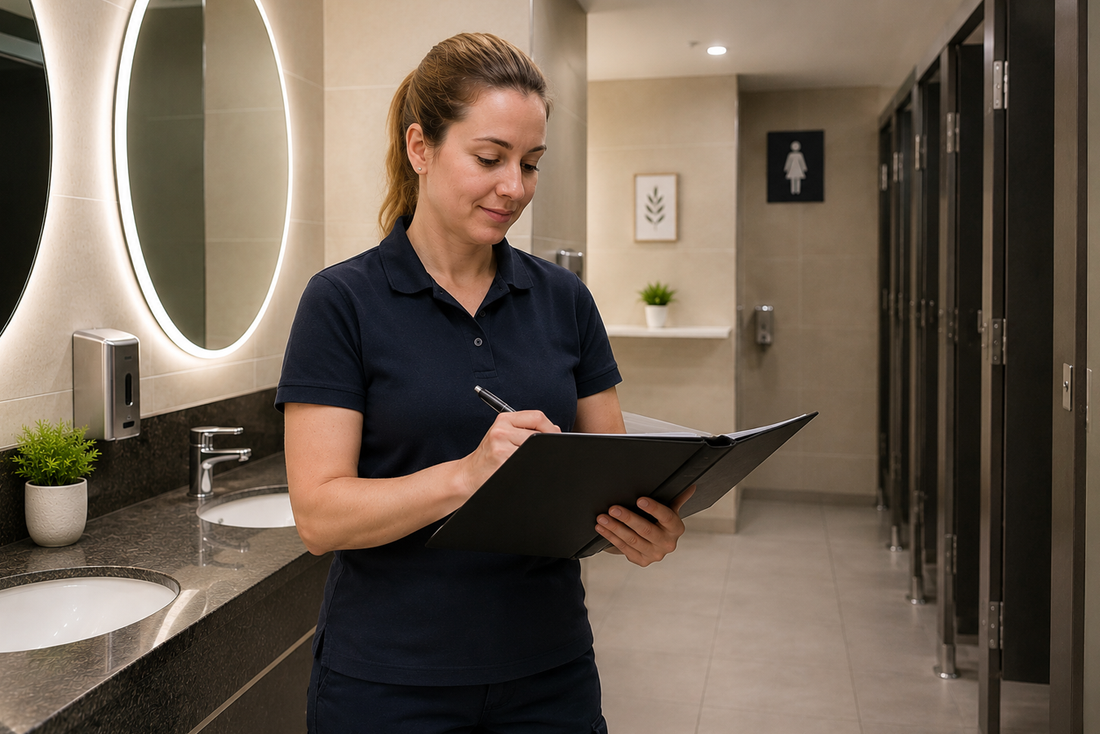
Restroom hygiene is one of the most visible indicators of facility management quality. Whether in commercial buildings, transportation hubs, educational campuses, healthcare facilities, or corporate workplaces, restroom conditions directly influence user perception, comfort, and confidence.
Yet many facilities still rely on cleaning schedules that focus on routine tasks rather than continuous hygiene management.
In reality, maintaining restroom standards requires more than a once-a-day cleaning cycle. It requires a structured system of cleaning, inspections, supply management, and ongoing monitoring.
This restroom hygiene checklist provides a practical framework that facility managers can use to maintain consistent standards across a wide range of commercial environments.
What Is a Restroom Hygiene Checklist for Commercial Facilities?
A restroom hygiene checklist is a structured set of cleaning, inspection, replenishment, and maintenance tasks used to maintain restroom cleanliness, safety, and user satisfaction. In commercial facilities, effective hygiene programs typically combine daily cleaning, scheduled inspections, consumable management, and periodic deep cleaning to ensure consistent standards throughout the day.
Key Takeaways
- Restroom hygiene requires more than daily cleaning.
- Inspection frequency should reflect actual facility usage.
- Consumable shortages are one of the most common causes of user complaints.
- Structured hygiene programs improve user experience and operational efficiency.
- High-traffic facilities benefit from proactive monitoring and replenishment schedules.
Table Of Contents
- Why Restroom Hygiene Matters in Commercial Facilities?
- The Reality: Cleaning Once a Day Isn't Enough
- The 3 Layers of an Effective Restroom Hygiene Program
- Recommended Inspection Frequency by Facility Usage
- Commercial Restroom Hygiene Checklist: Daily, Weekly & Monthly Tasks
- Consumables: One of the Most Visible Indicators of Restroom Quality
- Procurement Considerations for Restroom Hygiene Programs
- Common Restroom Hygiene Mistakes
- 5 Signs Your Restroom Hygiene Program Needs Improvement
- Applying Hygiene Standards Across Different Facility Types
- Hygiene Standards Go Beyond Compliance
- The Value of User Feedback
- Related Resources for Facility Managers
- Conclusion
Why Restroom Hygiene Matters in Commercial Facilities?
Restrooms may not be the first thing people notice when entering a facility, but they are often one of the most memorable parts of the overall experience.
Users increasingly expect clean, well-maintained facilities wherever they go. Whether they are employees, visitors, passengers, customers, or tenants, restroom conditions can influence how they perceive the quality and professionalism of an entire organization.
Poor restroom maintenance can lead to:
- Reduced user confidence
- Negative visitor impressions
- Increased hygiene concerns
- More complaints and service requests
- Lower overall satisfaction with the facility
For facility managers, restroom hygiene is not simply a cleaning responsibility. It is an operational standard that contributes to the overall user experience.
The Reality: Cleaning Once a Day Isn't Enough
Many facilities still operate on a fixed cleaning schedule. While scheduled cleaning remains essential, it does not always reflect actual usage patterns. In facilities with moderate to high restroom usage, conditions can change significantly between cleaning cycles. A restroom that is fully stocked and cleaned at the start of the day may require multiple inspections before midday to maintain the same standard of service.
Supplies run out, waste bins fill quickly, surfaces require attention, and unexpected issues can arise throughout the day.
This is why effective restroom management should be viewed as a continuous process rather than a single daily task.
The most successful facilities combine scheduled cleaning with inspections, replenishment procedures, and proactive monitoring.
|
Expert Insight
In high-traffic facilities, user perception is often shaped by restroom conditions at peak usage times rather than immediately after cleaning. Facilities that combine scheduled cleaning with ongoing inspections typically achieve more consistent hygiene outcomes than those relying solely on daily cleaning schedules. |
Facility management best practices generally recommend adjusting inspection frequency based on actual usage patterns rather than relying solely on fixed schedules.
The 3 Layers of an Effective Restroom Hygiene Program

1. Daily Cleaning: The Foundation
Daily cleaning establishes the baseline hygiene standard for the facility.
Typical tasks include:
- Cleaning toilet bowls and seats
- Sanitizing sinks and countertops
- Cleaning mirrors
- Mopping floors
- Emptying waste bins
- Replenishing essential supplies
Without a consistent daily cleaning routine, maintaining restroom standards becomes difficult regardless of how frequently inspections occur.
2. Scheduled Inspections: The Operational Difference
Many restroom hygiene issues occur between cleaning cycles.
Scheduled inspections throughout the day help identify problems before they affect users.
Inspection activities may include:
- Checking soap levels
- Monitoring tissue supplies
- Replenishing toilet seat covers
- Emptying bins when necessary
- Spot cleaning visible messes
- Identifying maintenance concerns
The required inspection frequency should reflect actual facility usage rather than a fixed timetable.
3. Deep Cleaning: Long-Term Maintenance
While daily cleaning addresses visible cleanliness, deep cleaning helps prevent gradual deterioration.
Areas often included in deep cleaning programs include:
- Hard-to-reach fixtures
- Ventilation systems
- Tile grout and corners
- Areas behind and beneath fittings
- Limescale and mineral buildup
Regular deep cleaning helps maintain hygiene standards while extending the lifespan of restroom fixtures and equipment.
Recommended Inspection Frequency by Facility Usage
The appropriate inspection schedule depends on usage levels and traffic patterns.
| Usage Level | Recommended Inspection Frequency |
|---|---|
| Low Usage | Every 3–4 hours |
| Moderate Usage | Every 2–3 hours |
| High Usage | Hourly |
| Peak Traffic Periods | Continuous monitoring or rapid-response checks |
Facilities should review inspection schedules periodically and adjust them based on observed demand and user feedback.
Commercial Restroom Hygiene Checklist: Daily, Weekly & Monthly Tasks
A structured checklist helps ensure consistency across locations and teams. For organizations managing multiple facilities, standardized checklists can also help maintain consistent hygiene standards across different locations and operational teams.
| Task | Frequency | Purpose |
|---|---|---|
| Clean toilets and seats | Daily | Maintain hygiene standards |
| Clean sinks, mirrors, and touchpoints | Daily | Improve user experience |
| Restock soap, tissue, and seat covers | Daily + inspections | Prevent supply shortages |
| Empty waste bins | Daily or as needed | Maintain cleanliness |
| Conduct restroom inspections | Every 2–4 hours | Identify issues early |
| Spot clean high-touch surfaces | As needed | Maintain appearance |
| Deep clean fixtures and hidden areas | Every 2–4 weeks | Prevent buildup |
| Review inventory levels | Weekly | Avoid stock shortages |
Many facilities use a restroom cleaning checklist alongside a broader restroom hygiene checklist to ensure cleaning tasks, inspections, maintenance activities, and consumable replenishment are completed consistently.
A checklist is only effective when supported by clear accountability, regular inspections, and consistent follow-through.
Consumables: One of the Most Visible Indicators of Restroom Quality
Users often judge restroom quality based on whether essential supplies are available when needed.
Even a clean restroom can create a negative impression if critical consumables are missing.
Soap
Hand hygiene begins with reliable soap availability. Empty dispensers can quickly undermine hygiene standards and user confidence.
Hand Drying Solutions
Whether using paper towels or hand dryers, facilities should ensure drying solutions remain functional and adequately stocked.
Toilet Seat Covers
In public-facing and high-traffic environments, toilet seat covers are increasingly viewed as a hygiene amenity that supports user confidence.
When evaluating toilet seat cover solutions, facility managers should consider:
- User experience
- Plumbing compatibility
- Storage requirements
- Replenishment efficiency
- Ease of use
Facilities purchasing seat covers at scale should also consider procurement, storage, and replenishment requirements. For facilities that choose to provide toilet seat covers, solutions such as LooREADY Flushable Toilet Seat Covers can help support hygiene expectations while fitting into broader restroom management programs.
Procurement Considerations for Restroom Hygiene Programs
Maintaining restroom standards is not only about cleaning procedures. The products and consumables used within a facility can also influence operational efficiency, maintenance requirements, and overall user experience.
When evaluating restroom hygiene supplies, facility managers and procurement teams should consider several factors beyond the initial purchase price.
Supply Reliability
Frequent stock shortages can disrupt restroom operations and create negative user experiences. Consistent product availability helps facilities maintain service standards without unexpected interruptions.
Replenishment Frequency
Products that require constant replacement can increase labor demands and operational complexity. Evaluating how often consumables need to be replenished can help improve efficiency, particularly in high-traffic environments.
Storage Requirements
Storage space is often limited in commercial facilities. Compact, easy-to-store consumables can simplify inventory management and reduce logistical challenges.
Maintenance Impact
Some restroom products may create additional maintenance requirements through excessive waste generation, dispenser issues, or plumbing concerns. Selecting solutions that integrate smoothly into existing maintenance processes can reduce long-term operational burdens.
User Experience
Ease of use, accessibility, and perceived cleanliness all influence how users experience a restroom environment. Products that support a positive user experience can contribute to higher satisfaction levels and fewer complaints.
Total Cost of Ownership
The lowest purchase price does not always represent the lowest overall cost. Facilities should evaluate factors such as replenishment frequency, labor requirements, maintenance implications, storage needs, and product performance when assessing long-term value.
This is particularly important for facilities managing high user volumes, where small differences in replenishment frequency and maintenance requirements can significantly affect operational costs over time.
By considering these factors alongside cleaning and inspection procedures, facilities can build restroom hygiene programs that are both operationally efficient and user-focused.
Common Restroom Hygiene Mistakes
Common challenges include:
- Relying solely on daily cleaning
- Infrequent restroom inspections
- Poor inventory management
- Delayed response to complaints
- Inconsistent replenishment procedures
- Lack of documented maintenance processes
Addressing these issues often delivers significant improvements without major operational changes.
5 Signs Your Restroom Hygiene Program Needs Improvement

Even facilities with established cleaning schedules can experience ongoing hygiene challenges. The issue is often not a lack of effort, but a lack of visibility into whether current processes are meeting operational requirements.
The following signs may indicate that a restroom hygiene program needs to be reviewed or adjusted:
Frequent Supply Shortages
If soap, tissue, paper towels, or toilet seat covers regularly run out between inspections, replenishment schedules may not align with actual usage levels.
Recurring User Complaints
Repeated complaints about cleanliness, odors, or missing supplies often point to gaps in inspection routines, communication processes, or maintenance response times.
Overflowing Waste Bins
Overflowing bins can quickly affect perceptions of cleanliness and may indicate that waste management schedules need to be reviewed.
Inconsistent Cleanliness Standards
If restroom conditions vary significantly throughout the day, cleaning and inspection procedures may not be providing consistent coverage during peak usage periods.
Increased Maintenance Requests
Frequent reports related to fixtures, dispensers, plumbing issues, or damaged facilities may signal underlying maintenance and monitoring challenges.
Regularly reviewing these indicators can help facility managers identify improvement opportunities before they affect user satisfaction or operational performance.
Monitoring user feedback, inspection records, supply consumption patterns, and maintenance requests can help facilities identify trends and make data-informed improvements to restroom hygiene programs.
Applying Hygiene Standards Across Different Facility Types
While restroom requirements vary between industries, the principles of effective hygiene management remain consistent.
Commercial buildings, transportation hubs, educational campuses, healthcare facilities, and hospitality environments all depend on:
- Consistent cleaning procedures
- Scheduled inspections
- Reliable consumable management
- Responsive maintenance systems
Facilities with higher usage levels typically require more frequent monitoring and replenishment schedules.
For example, transportation environments often require more frequent inspections and replenishment schedules due to fluctuating passenger volumes throughout the day.
Hygiene Standards Go Beyond Compliance
Meeting regulatory requirements is important, but compliance alone does not guarantee a positive restroom experience.
Users evaluate restrooms based on what they encounter in real time:
- Are supplies available?
- Are surfaces clean?
- Are issues addressed promptly?
- Does the facility appear well maintained?
Strong restroom hygiene programs focus on operational excellence rather than minimum standards.
The Value of User Feedback
Restroom complaints should be viewed as operational insights rather than inconveniences.
Feedback related to cleanliness, supplies, odors, or maintenance issues can help facility managers identify weaknesses in existing processes.
Many facilities now support feedback collection through:
- QR code reporting systems
- Digital facility management platforms
- Customer service channels
- On-site reporting procedures
When addressed quickly, even small improvements can have a measurable impact on user satisfaction.
Related Resources for Facility Managers
Depending on your facility type and operational requirements, you may also find these guides useful:
- Commercial Washroom Hygiene Products for High-Traffic Facilities
- Bulk Toilet Seat Covers: What Large Facilities Should Know Before Buying
- How Airports Maintain Bathroom Hygiene in High-Traffic Restrooms
- Improving Passenger Hygiene Experience in First-Class Train Coaches
Conclusion
Restroom hygiene is not about achieving perfection. It is about delivering consistency.
A structured hygiene program built around cleaning, inspections, consumable management, and continuous monitoring helps facilities maintain standards throughout the day.
The benefits extend beyond cleanliness alone:
- Improved user satisfaction
- Better visitor and passenger experiences
- Fewer complaints
- Stronger facility standards
- More efficient operations
Ultimately, users do not judge a restroom based on when it was last cleaned. They judge it based on its condition when they need to use it.
Using a structured restroom hygiene checklist helps facility managers deliver consistent restroom experiences while reducing complaints, supply shortages, and operational inefficiencies.
As facility expectations continue to rise, proactive restroom hygiene management becomes an important part of overall facility performance.


