
| Quick Answer
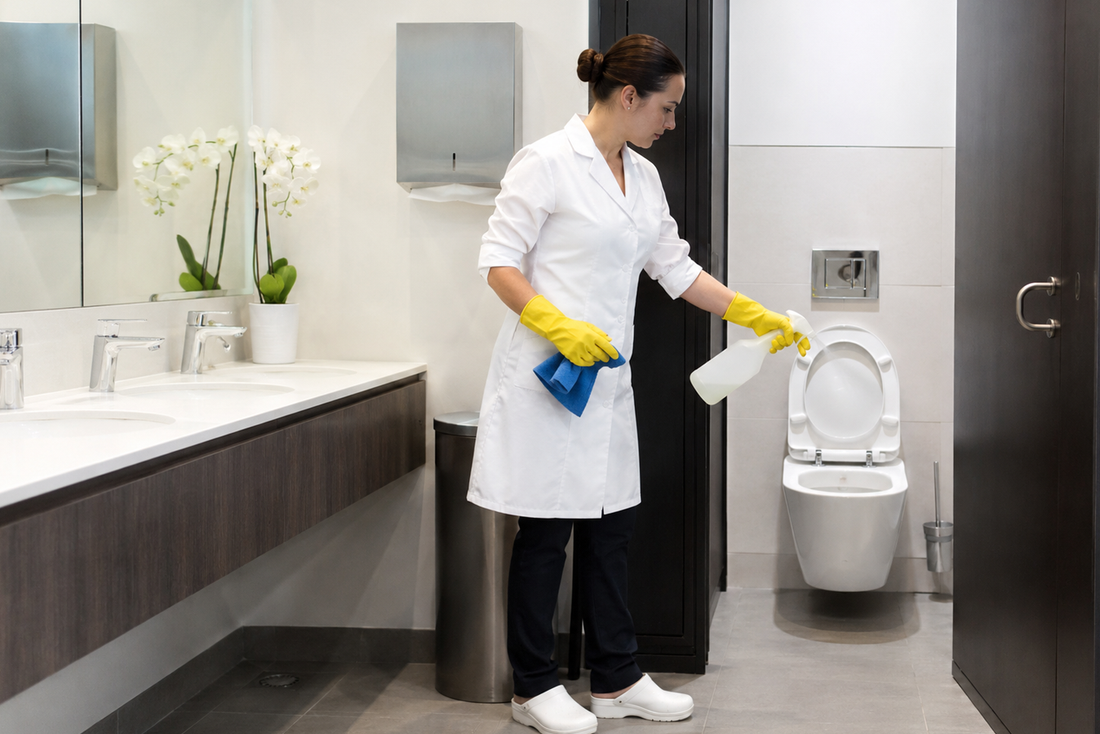
Commercial restroom odors are usually caused by bacteria, urine scale, drain biofilm, poor ventilation, moisture, or plumbing issues, not simply a lack of air freshener. The most effective odor control strategy combines routine deep cleaning, proper ventilation, drain maintenance, waste management, and odor-neutralizing products. High-traffic facilities should focus on eliminating odor at its source rather than masking it with fragrances. |
Key Takeaways
- Persistent restroom odors are typically caused by underlying hygiene or maintenance issues.
- Air fresheners alone cannot eliminate odors caused by bacteria, biofilm, or plumbing problems.
- Regular deep cleaning, ventilation, and preventive maintenance are essential for long-term odor control.
- High-traffic facilities benefit from standardized cleaning schedules and odor management protocols.
- A clean, fresh-smelling restroom improves visitor confidence, employee satisfaction, and overall brand perception.
Table of Contents
- Introduction
- By the Numbers
- Why Do Commercial Restrooms Develop Persistent Odors?
- 10 Effective Commercial Restroom Odor Control Solutions
- Best Practices for Long-Term Commercial Restroom Odor Control
- Common Mistakes That Make Commercial Restroom Odors Worse
- Final Words
- Sources
Introduction
A clean, odor-free restroom is more than a hygiene requirement; it's a reflection of how an organization manages its facilities. Whether it's an office building, hotel, shopping mall, hospital, airport, school, or railway station, unpleasant restroom odors can quickly shape a visitor's perception of cleanliness, maintenance standards, and overall brand quality.
Many facilities try to solve odor problems with air fresheners or fragrances, but these only mask the smell temporarily. In most cases, persistent restroom odors are caused by underlying issues such as bacterial buildup, urine scale, drain biofilm, inadequate ventilation, excess moisture, or inconsistent cleaning practices. Unless these root causes are addressed, unpleasant odors are likely to return regardless of how often fragrances are used.
Effective commercial restroom odor control requires a proactive maintenance strategy that combines routine cleaning, preventive maintenance, ventilation management, waste control, and the right hygiene products. These practices are especially important in high-traffic environments such as airports, where maintaining consistent restroom hygiene is essential for passenger satisfaction. Learn how high-traffic airports address these challenges in our guide to airport restroom sanitation products.
In this guide, we'll explain what causes commercial restroom odors, how to eliminate them effectively, and the best practices facility managers can implement to maintain clean, fresh, and welcoming restrooms every day.
By the Numbers
The impact of restroom cleanliness extends far beyond hygiene. Research shows that restroom conditions directly influence how visitors perceive a business and highlight the importance of proper indoor air quality.
- 90% of Americans associate high-quality restrooms with a high-quality business facility.[1]
- 70% of customers say clean, odor-free restrooms influence their perception of a business.[1]
- According to the U.S. Environmental Protection Agency (EPA), concentrations of some indoor air pollutants can be 2-5 times higher than outdoor levels, underscoring the importance of proper ventilation and indoor air quality.[2]
Why Do Commercial Restrooms Develop Persistent Odors?

Persistent odors in commercial restrooms are rarely caused by a single issue. In most cases, they result from a combination of heavy foot traffic, bacterial growth, moisture, inadequate ventilation, and inconsistent maintenance practices. While air fresheners may temporarily mask unpleasant smells, they do not address the underlying causes, allowing odors to return quickly.
One of the most common sources of restroom odors is urine scale, a mineral buildup that forms inside urinals, toilet bowls, and plumbing lines. Over time, bacteria thrive on these deposits, producing unpleasant ammonia-like odors even after routine cleaning. Similarly, drain biofilm, a slimy layer of bacteria and organic matter that accumulates inside floor drains and sink drains, can generate persistent foul smells if not removed through regular deep cleaning.
Ventilation also plays a critical role in odor control. Poor airflow allows humidity, moisture, and airborne odor particles to linger, creating an unpleasant environment for restroom users. Facilities with inadequate exhaust systems or blocked vents often struggle with recurring odors despite maintaining regular cleaning schedules.
In high-traffic environments such as airports, shopping malls, hospitals, hotels, office buildings, schools, and railway stations, the challenge becomes even greater. Thousands of daily users increase the accumulation of bacteria, waste, moisture, and organic matter, making preventive maintenance essential. Overflowing waste bins, neglected plumbing issues, and infrequent deep cleaning can all contribute to odors that become increasingly difficult to eliminate over time.
The most effective approach to commercial restroom odor control is to identify the source of the odor first. Once the root cause is understood, facility managers can implement targeted cleaning procedures, maintenance practices, ventilation improvements, and hygiene solutions that prevent odors from returning instead of simply covering them up.
Key Terms
Urine scale: A hard mineral deposit that forms inside toilets, urinals, and plumbing fixtures, providing a surface where odor-causing bacteria can accumulate.
Drain biofilm: A layer of bacteria and organic matter that builds up inside drains and is a common source of persistent restroom odors.
Odor neutralizer: A product that chemically eliminates odor-causing compounds rather than simply masking them with fragrance.
Common Restroom Odors and Their Likely Causes
Not all restroom odors have the same source. Identifying the type of odor can help facility managers diagnose the underlying problem more quickly and choose the most effective corrective action.
| If You Notice... | Most Likely Cause | Recommended Action |
|---|---|---|
| Strong ammonia or urine odor | Urine scale buildup inside toilets, urinals, or plumbing lines | Remove mineral deposits with commercial descaling products and schedule regular deep cleaning. |
| Musty or damp smell | Poor ventilation, excess humidity, or moisture buildup | Improve airflow, inspect exhaust fans, and maintain HVAC systems. |
| Sewer-like odor | Dry drain traps, damaged seals, or plumbing issues | Inspect plumbing fixtures, refill drain traps, and repair leaks or damaged seals. |
| Foul smell from the floor or sink drains | Drain biofilm and organic matter accumulation | Clean drains regularly using enzyme-based or drain-safe cleaning products. |
| Persistent trash odor | Overflowing or unsanitized waste bins | Empty waste bins frequently and disinfect receptacles as part of routine cleaning. |
| General unpleasant odor throughout the restroom | High foot traffic combined with inconsistent cleaning and maintenance | Increase cleaning frequency, improve inspections, and implement a preventive odor control program. |
In short: Most commercial restroom odors can be traced to bacteria, urine scale, drain biofilm, poor ventilation, or plumbing issues. Identifying the source first allows facility managers to choose the most effective corrective action.
Tip: If unpleasant odors return shortly after cleaning, the problem is likely below the surface, such as urine scale, drain biofilm, or a plumbing issue, rather than the air itself. Investigating the root cause is more effective than relying on additional air fresheners.
10 Effective Commercial Restroom Odor Control Solutions

Once you've identified the source of persistent restroom odors, the next step is implementing solutions that eliminate odors at their origin rather than simply masking them. An effective odor control program combines routine cleaning, preventive maintenance, proper ventilation, waste management, and hygiene best practices. The following strategies can help facility managers maintain fresh, welcoming restrooms while reducing recurring odor complaints in high-traffic commercial environments.
1. Improve Ventilation and Air Circulation
Proper ventilation is one of the most effective ways to prevent odors from lingering in commercial restrooms. Exhaust fans, HVAC systems, and fresh air circulation help remove moisture, airborne bacteria, and unpleasant odor particles before they accumulate. Regularly inspect ventilation systems for blocked vents, dirty filters, or malfunctioning fans that may reduce airflow. In high-traffic facilities, maintaining adequate ventilation is essential for improving indoor air quality and creating a more comfortable restroom environment.
2. Remove Urine Scale and Mineral Buildup
Routine cleaning may leave behind urine scale, a hard mineral deposit that forms inside toilets, urinals, and plumbing lines. These deposits trap bacteria that produce persistent ammonia-like odors even after surfaces appear clean. Using commercial descaling products as part of a scheduled deep-cleaning program helps remove these hidden odor sources and prevents them from building up over time.
3. Deep Clean Drains to Eliminate Biofilm
Floor drains and sink drains often develop biofilm, a layer of bacteria and organic matter that can generate unpleasant odors. Because biofilm forms below the surface, standard surface cleaning usually isn't enough. Periodic drain cleaning with enzyme-based or drain-safe cleaning products helps break down organic buildup and reduces recurring odors while keeping drainage systems functioning efficiently.
4. Use Enzyme-Based Cleaners for Long-Term Odor Control
Unlike traditional air fresheners that simply cover unpleasant smells, enzyme-based cleaners break down the organic material that causes odors in the first place. They're particularly effective around urinals, grout lines, floor drains, and other areas where bacteria accumulate. Incorporating enzyme cleaners into routine maintenance can significantly improve long-term odor control in commercial restrooms.
5. Maintain Toilets, Urinals, and Plumbing Systems
Leaks, damaged seals, clogged drains, and sewer gas can all contribute to unpleasant restroom odors. Regular plumbing inspections help identify maintenance issues before they become larger problems. Checking toilet seals, flushing mechanisms, drain traps, and water flow ensures that plumbing systems continue operating efficiently while minimizing odor-related complaints.
6. Increase Cleaning Frequency in High-Traffic Restrooms
Cleaning schedules should reflect restroom usage rather than fixed time intervals. Facilities with heavy foot traffic, including airports, shopping malls, hospitals, hotels, schools, and office buildings, often require multiple inspections and cleaning cycles throughout the day. Frequently disinfecting high-touch surfaces, replenishing supplies, and removing waste before bins overflow help maintain a consistently clean and fresh environment.
7. Manage Waste Bins and Hygiene Disposal Properly
Overflowing trash bins and hygiene waste containers quickly become sources of unpleasant odors. Empty waste receptacles regularly, use liners designed to contain leaks, and sanitize bins as part of routine cleaning. Proper waste management not only controls odors but also supports overall restroom hygiene and improves the experience for visitors and employees.
8. Use Commercial Odor Neutralizers Instead of Relying Only on Air Fresheners
Air fresheners provide a temporary improvement in fragrance but rarely eliminate the source of unpleasant odors. Commercial odor-neutralizing products work by chemically reducing or eliminating odor-causing compounds rather than simply masking them. When combined with proper cleaning and ventilation, these products help maintain a fresher restroom for longer periods.
9. Train Cleaning Staff on Preventive Restroom Maintenance
Effective odor control depends on more than cleaning products; it requires consistent maintenance practices. Training janitorial staff to recognize early signs of urine scale, plumbing issues, blocked drains, ventilation problems, and overflowing waste bins helps prevent odors before they become noticeable. Standardized inspection checklists and maintenance logs also improve consistency across multiple facilities.
10. Enhance User Confidence with Flushable Toilet Seat Covers and Touch-Free Hygiene Solutions
Odor control is only one part of delivering a positive restroom experience. Visitors also judge cleanliness based on the hygiene amenities available to them. Providing flushable toilet seat covers and touch-free dispensers demonstrates a commitment to user safety and comfort.
Facilities looking to improve both restroom hygiene and user confidence may also consider commercial-grade flushable toilet seat covers, which provide an additional layer of protection and help reinforce users' perception of a clean, well-maintained restroom. LooREADY Flushable Toilet Seat Covers are designed specifically for high-traffic commercial environments.
While toilet seat covers do not eliminate odors directly, they reinforce the perception of a clean, professionally maintained restroom and complement a comprehensive hygiene program. If you're evaluating products for offices, hospitals, hotels, airports, schools, or other high-traffic facilities, explore our guide to the best commercial washroom hygiene products for high-traffic facilities to compare the essential products every commercial restroom should have.
Best Practices for Long-Term Commercial Restroom Odor Control

Keeping commercial restrooms consistently fresh requires more than responding to odor complaints as they arise. The most successful facilities adopt a proactive odor management strategy that combines preventive maintenance, regular inspections, and standardized cleaning procedures. By addressing potential issues before they become noticeable, businesses can improve restroom hygiene, reduce maintenance costs, and create a better experience for employees, customers, and visitors.
Odor control should be part of a broader restroom maintenance program rather than a standalone task. Using a standardized inspection and cleaning process helps ensure that ventilation systems, plumbing fixtures, drains, waste bins, and hygiene supplies are checked consistently. For a comprehensive maintenance framework, refer to our Commercial Restroom Hygiene Checklist, which outlines the essential daily, weekly, and monthly practices for maintaining clean, hygienic, and odor-free facilities.
To maintain long-term odor control, follow these best practices:
- Develop a preventive cleaning schedule. Base cleaning frequency on restroom usage rather than fixed time intervals. High-traffic facilities may require inspections and cleaning multiple times throughout the day.
- Inspect plumbing and drainage systems regularly. Leaking fixtures, dry drain traps, clogged drains, and damaged toilet seals can all contribute to recurring odors if left unaddressed.
- Prioritize deep cleaning alongside routine cleaning. While daily cleaning removes visible dirt, scheduled deep cleaning helps eliminate urine scale, drain biofilm, and hidden bacteria that often cause persistent odors.
- Maintain ventilation systems. Clean exhaust fans, replace HVAC filters as recommended, and ensure adequate airflow to reduce humidity and remove odor-causing particles.
- Monitor waste disposal areas. Empty trash bins and sanitary waste containers before they overflow, and disinfect receptacles regularly to prevent odor buildup.
- Use standardized inspection checklists. Regular inspections help housekeeping teams identify odor sources early, ensuring maintenance issues are resolved before they affect restroom users.
- Keep hygiene supplies fully stocked. Well-maintained restrooms with adequate soap, paper products, and flushable toilet seat covers reinforce cleanliness and encourage visitors to use facilities responsibly.
Choosing the right hygiene products is equally important. Our guide to Best Commercial Washroom Hygiene Products for High-Traffic Facilities compares the essential products businesses should consider.
Long-term odor control is most effective when cleaning, maintenance, ventilation, and hygiene products work together as part of a comprehensive restroom management program. Facilities that take a preventive approach are more likely to provide a consistently clean, comfortable, and welcoming restroom experience while reducing recurring odor-related complaints.
Common Mistakes That Make Commercial Restroom Odors Worse
Even facilities with regular cleaning schedules can experience persistent restroom odors if underlying issues are overlooked. In many cases, recurring odor complaints are the result of small maintenance or operational mistakes that allow bacteria, moisture, and waste to accumulate over time. Avoiding these common pitfalls can help maintain a consistently clean and fresh restroom environment.
Relying Only on Air Fresheners
Air fresheners may temporarily improve the smell of a restroom, but they do not eliminate the bacteria, urine scale, or drain buildup causing the odor. Treat fragrances as a complement to proper cleaning—not a replacement for it.
Skipping Deep Cleaning
Daily surface cleaning is important, but it often misses hidden odor sources such as drain biofilm, grout lines, plumbing fixtures, and mineral deposits. Without scheduled deep cleaning, odors can return even when restrooms appear clean.
Ignoring Ventilation Problems
Poor airflow traps humidity and odor-causing particles inside the restroom. Dirty exhaust fans, blocked vents, or poorly maintained HVAC systems can significantly reduce air quality and make odors linger longer.
Delaying Plumbing Repairs
Leaking pipes, damaged toilet seals, clogged drains, or dry floor drain traps can all contribute to unpleasant odors. Addressing plumbing issues promptly helps prevent recurring odor problems and avoids more costly repairs later.
Allowing Waste Bins to Overflow
Overflowing trash bins and sanitary waste containers quickly become breeding grounds for bacteria and unpleasant smells. Emptying and sanitizing waste receptacles regularly is essential, especially in high-traffic facilities.
Using the Same Cleaning Schedule for Every Restroom
A restroom serving hundreds or thousands of users each day requires more frequent inspections and cleaning than one with light usage. Cleaning schedules should be based on traffic patterns and adjusted during peak hours or special events.
Neglecting Staff Training and Inspections
Even the best cleaning products cannot compensate for inconsistent maintenance practices. Regular training, inspection checklists, and clear cleaning procedures help ensure housekeeping teams identify and address odor sources before they become noticeable.
Overlooking the Overall Restroom Experience
Users often associate cleanliness with more than just the absence of odors. Empty soap dispensers, poorly stocked paper products, or missing flushable toilet seat covers can create the impression of an unhygienic facility, even if the restroom is regularly cleaned. Maintaining hygiene supplies alongside odor control measures helps build user confidence and reinforces a positive perception of the facility.
By avoiding these common mistakes and adopting a proactive maintenance strategy, facility managers can reduce odor complaints, improve operational efficiency, and provide a cleaner, more welcoming restroom experience for every visitor.
Final Words
Maintaining an odor-free commercial restroom requires more than masking unpleasant smells with fragrances. The most effective odor control strategies focus on identifying and eliminating the root causes, whether it's bacteria, urine scale, drain biofilm, poor ventilation, plumbing issues, or inconsistent cleaning practices. By combining preventive maintenance, regular deep cleaning, proper ventilation, and routine inspections, facility managers can create restrooms that remain clean, fresh, and welcoming every day.
For businesses, restroom cleanliness is more than a maintenance task; it's an important part of the overall customer and employee experience. Clean, well-maintained restrooms help build trust, reinforce a commitment to hygiene, and leave a lasting positive impression on visitors. Complementing a comprehensive odor control program with quality hygiene products, such as flushable toilet seat covers and touch-free dispensers, further enhances user confidence and demonstrates attention to detail.
Whether you manage an office building, hotel, hospital, shopping mall, airport, school, or other high-traffic facility, adopting a proactive restroom hygiene strategy will help reduce odor complaints, improve operational efficiency, and support a cleaner, healthier environment for everyone.
Looking to Improve Restroom Hygiene?

Creating a clean, odor-free restroom starts with the right maintenance practices and the right hygiene products. LooREADY Flushable Toilet Seat Covers help businesses provide a cleaner, more comfortable restroom experience in offices, hotels, hospitals, airports, schools, and other high-traffic facilities.


