
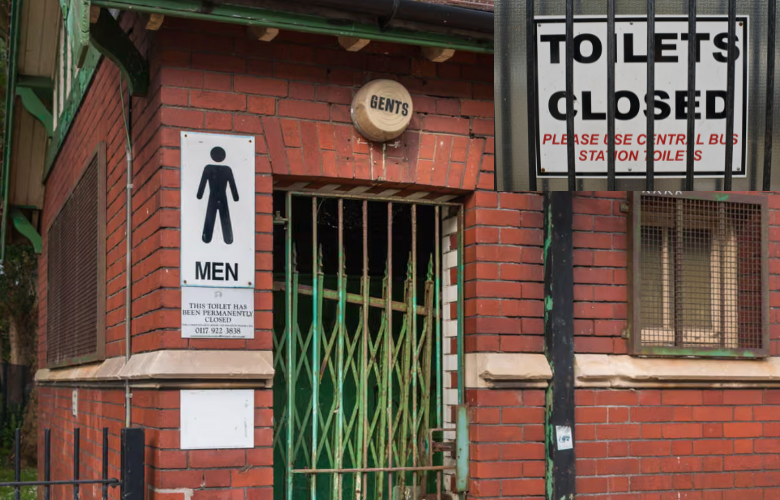
The UK is facing a growing public toilet crisis as thousands of public toilets have closed over the past two decades. Rising maintenance costs, local authority budget pressures, and changing public infrastructure priorities have reduced access to public restrooms across Britain. The shortage affects travellers, older adults, people with disabilities, families, and anyone who relies on convenient access to toilet facilities while away from home.
The decline in public toilet availability has sparked growing concerns about public health, accessibility, tourism, and quality of life across the UK.
| Quick Answer
Why Are Public Toilets Disappearing in the UK? Public toilets are disappearing across the UK due to local authority budget cuts, rising maintenance costs, vandalism concerns, and the lack of a legal requirement for councils to provide public restroom facilities. As a result, Britain has lost thousands of public toilets over the past two decades, reducing access for travellers, older adults, people with disabilities, and local communities. |
Key Facts About the UK Public Toilet Crisis
- Britain has lost roughly half of its public toilets since the early 2000s.[2][3]
- England has experienced a 14% decline in public toilet facilities over the past decade, creating what public health leaders describe as "toilet deserts." [1]
- There is now approximately one public toilet for every 15,481 people in England. [1][4]
- Scotland experienced a 25% decline in public lavatories between 2007 and 2024.[5]
- Around 74% of people say there are not enough public toilets in their local area. [1]
Why Does the Public Toilet Shortage Matter?
Using public restrooms in Britain has become more than just inconvenient; it's increasingly viewed as a public health, accessibility, and equality issue. With nearly half of public toilets removed since the early 2000s, many citizens, including older adults, people with disabilities, and those with chronic conditions, face reduced mobility and fewer opportunities to participate in everyday activities.[2][3]
Recent analysis by the Royal Society for Public Health found that England now has just one public toilet for every 15,481 people. Public health experts warn that these growing "toilet deserts" can discourage people from staying hydrated, reduce participation in community activities, and create additional challenges for older adults, people with disabilities, and those managing health conditions. [1][4]
Public Toilet Closures Across the UK
Raymond Martin, Managing Director of the British Toilet Association, vividly calls the decline a “crisis of convenience.” Since 2000, the UK has seen a reduction of around 50% in public toilet facilities, driven by austerity measures, post-COVID closures, and cuts to local authority budgets.[6]
‘I dream about toilets, I admit it’: the man on a mission to improve Britain’s loos - Emine Saner [7]
Scotland reflects this decline acutely: between 2007 and 2024, the number of public lavatories dropped by 25%, and cities like Edinburgh now have around half the toilets they once did, just 14 left to serve over 5 million annual visitors. [5]

How Public Toilet Shortages Affect Daily Life?
The consequence? A growing number of Brits report living on a “urinary leash,” limiting outings to avoid shame or health emergencies. A staggering 74% say they lack enough public loos in their area. [1][8] Some even resort to drinking less fluid, delaying journeys, or avoiding certain activities altogether to reduce the risk of needing a toilet while away from home. [9]
For many, particularly those with incontinence, disabilities, or other conditions requiring frequent bathroom access, public toilets are not a convenience but a necessity. [10]
Why Are Public Toilets Disappearing?
The closures trace back to multiple pressures: reduced local authority funding, increased operational costs, and a lack of statutory obligation for councils to maintain facilities. [11] While community toilet schemes, where local businesses open their loos to the public, offer some relief, they're inconsistent and unable to fully compensate.
Potential Solutions to the UK Public Toilet Crisis
Martin and advocacy groups are campaigning to make public toilets a statutory requirement, backed with government funding. They also suggest innovative models like integrating restrooms into coffee shops or community hubs to help subsidise maintenance costs. [12]
Wales has led the way by requiring local authorities to develop annual public toilet strategies, though the UK as a whole lacks unified national mandates. [13]
Public toilets are essential infrastructure, central to health, equality, and public life. Without them, entire communities face barriers to access and inclusion. But with dedicated advocacy, ambitious policy reform, and creative funding models, Britain can transform this hidden crisis into a wake-up call.
Some local authorities have also adopted Community Toilet Schemes, which allow members of the public to use participating cafés, pubs, and businesses without making a purchase.
Staying Prepared When Public Toilets Are Limited

While policy reforms and improved public toilet access may take time, individuals can take practical steps to stay comfortable and hygienic when travelling, commuting, or spending extended periods away from home.
Many people choose to carry essentials such as hand sanitiser, disinfectant wipes, and flushable toilet seat covers to feel more confident when using public restroom facilities.
For those concerned about public restroom hygiene, flushable toilet seat covers can provide an added layer of comfort and help reduce direct contact with toilet seat surfaces.
Learn more about how LooREADY flushable toilet seat covers can help make public restroom visits more comfortable and hygienic.
Sources
- The Guardian - England left with 'toilet deserts' as public facilities decline by 14% in a decade (2026)
- Liberal Democrats - Loo-less Britain: Number of public toilets falls by 14% in 5 years (2023)
- British Safety Council - Public ‘toilet deserts’ in England: a growing health and safety risk for mobile workers (2026)
- Royal Society for Public Health public toilet access survey RSPH - Public toilet ‘deserts’ widespread across England (2026)
- Scottish Liberal Democrats - SNP have starved local communities of funding for public toilets (2025)
- NIH - Increasing community vulnerability to gastrointestinal infections in austerity’s shadow: a comparative study of two English local authorities (2026)
- The Guardian: "I dream about toilets, I admit it" by Emine Saner (2025)
- RSPH - Taking the P: Improving public toilets in the UK (2019)
- RSPH -The decline of the great British public toilet (2019)
- Big Issue - 'I urinated myself in the opticians': UK's public toilet crisis makes disabled people feel like 'prisoners' (2023)
- The Guardian - Look at this beautiful Japanese toilet and tell me – why is Britain so useless at public loos? (2024)
- The Guardian - Campaign launched to make public toilets a legal requirement in Britain (2025)
- Wales Government - The Provision of Toilets in Wales: Local Toilets Strategies (2018)


1 comment
Good