
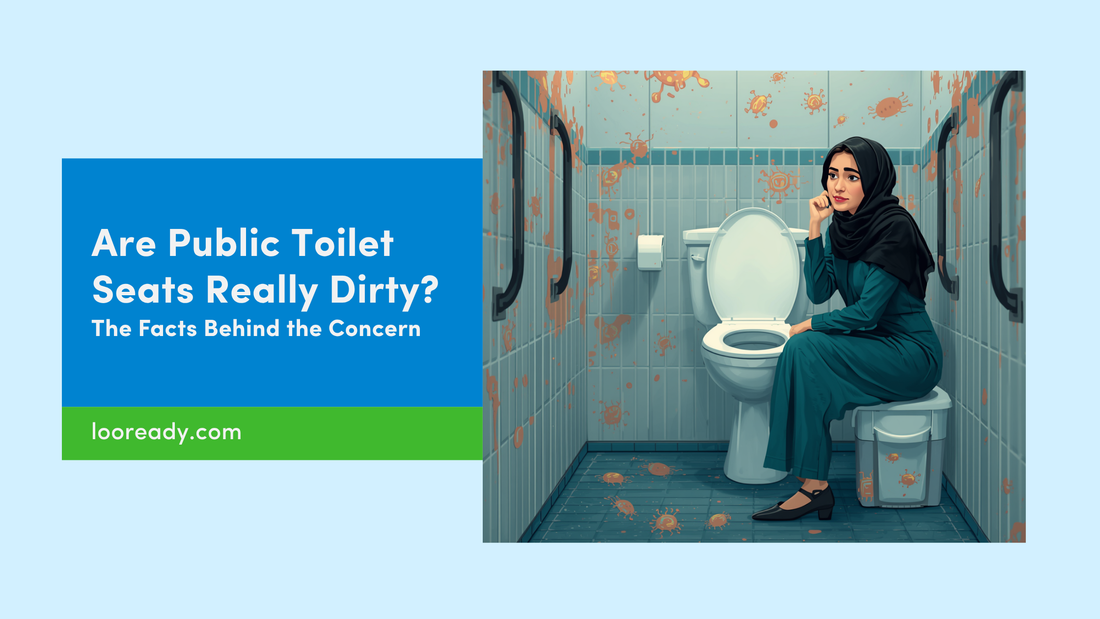
Most of us have a routine when we walk into a public restroom.
Some people hover. Some layer toilet paper across the seat. Others just try to get in and out as quickly as possible.
Very few people sit down without thinking twice.
And honestly, that instinct isn’t wrong.
Public toilets are shared spaces. They’re used constantly, often faster than they can realistically be cleaned. So the real question isn’t “Are they dirty?” - it’s “How risky are they, and are we dealing with it the right way?”
Also read; How to use Toilets on a Plane?
So… What’s Actually on a Public Toilet Seat?
Let’s not overcomplicate it - yes, public toilet seats can carry bacteria. That’s been shown in multiple studies across different environments.
Common ones include bacteria like E. coli and other microbes that naturally end up on surfaces in high-use areas. The amount varies depending on how recently the restroom was cleaned and how busy it’s been since.
There’s also something most people don’t think about: what happens when you flush.
In public restrooms (where there’s usually no lid), flushing can release tiny droplets into the air that settle on nearby surfaces - including the seat. It’s not visible, but it’s part of the picture.
Can You Actually Get Sick from a Toilet Seat?
This is where things get interesting.
For most healthy adults, the risk from simply sitting on a toilet seat is actually quite low. Your skin acts as a barrier. So casual contact alone usually isn’t enough to cause an issue.
But there are a few situations where the risk increases:
- If you have cuts or irritated skin
- If there’s indirect transfer (like touching surfaces and then your face)
- If your immune system is weaker
- For children, elderly individuals, or people with sensitivities
The bigger risk, in reality, isn’t always the seat - it’s your hands.
Handles, locks, flush buttons… those are touched constantly and often carry more contamination.
The Things We Do to “Stay Safe” (And Why They Don’t Really Work)
Let’s talk about the common habits.
Hovering
It feels safer, but it’s not ideal. It puts strain on your body and often leads to splashing - which actually makes the seat less clean for the next person.
Toilet Paper on the Seat
This is probably the most common trick. But toilet paper is thin, moves easily, and doesn’t really create a proper barrier. Plus, you’re handling it with your hands before placing it down.
Paper Seat Covers
Better than nothing - but still not great. They tear easily, don’t stay in place, and sometimes don’t flush well, especially in modern systems.
Avoiding Toilets Altogether
This might sound extreme, but a lot of people do it. And it comes with its own issues - holding it in, dehydration, discomfort. Not exactly a long-term solution.
So What Actually Works?
You don’t need to overthink it. A few simple things go a long way:
- Use a reliable barrier that stays in place
- Avoid touching unnecessary surfaces
- Wash your hands properly (this is the big one)
And if you’re someone who uses public restrooms often - travel, commuting, long days out - it makes sense to have something dependable with you.
That’s where products like LooREADY toilet seat covers come in.

They’re designed to solve the exact problem most people try to fix with tissue or paper covers:
- They stay in place
- They create a proper barrier
- And you can flush them after use without worrying about plumbing
Plus, they’re individually wrapped, so you’re not relying on whatever condition the restroom is in.
Where This Matters the Most?
Not all public toilets are the same. Some are well-maintained, others… not so much.
You’ll notice the biggest difference in places like:
- Airports and transit hubs
- Trains and long-distance travel
- Schools and universities
- Malls, gyms, and stadiums
- Healthcare settings
Basically, anywhere with high foot traffic and unpredictable cleaning schedules.
The Bottom Line
Yes - public toilet seats can be dirty.
But they’re not as dangerous as most people imagine.
The real issue isn’t panic - it’s using solutions that actually work.
Hovering and toilet paper hacks might feel safe, but they don’t really solve the problem. A simple, practical approach does:
- Use a proper barrier
- Be mindful of what you touch
- Wash your hands properly
That’s it.
Because at the end of the day, it’s not about avoiding public toilets - it’s about being ready for them.
For more on staying protected while travelling, read: How to Use Public Toilets Safely While Traveling?


